
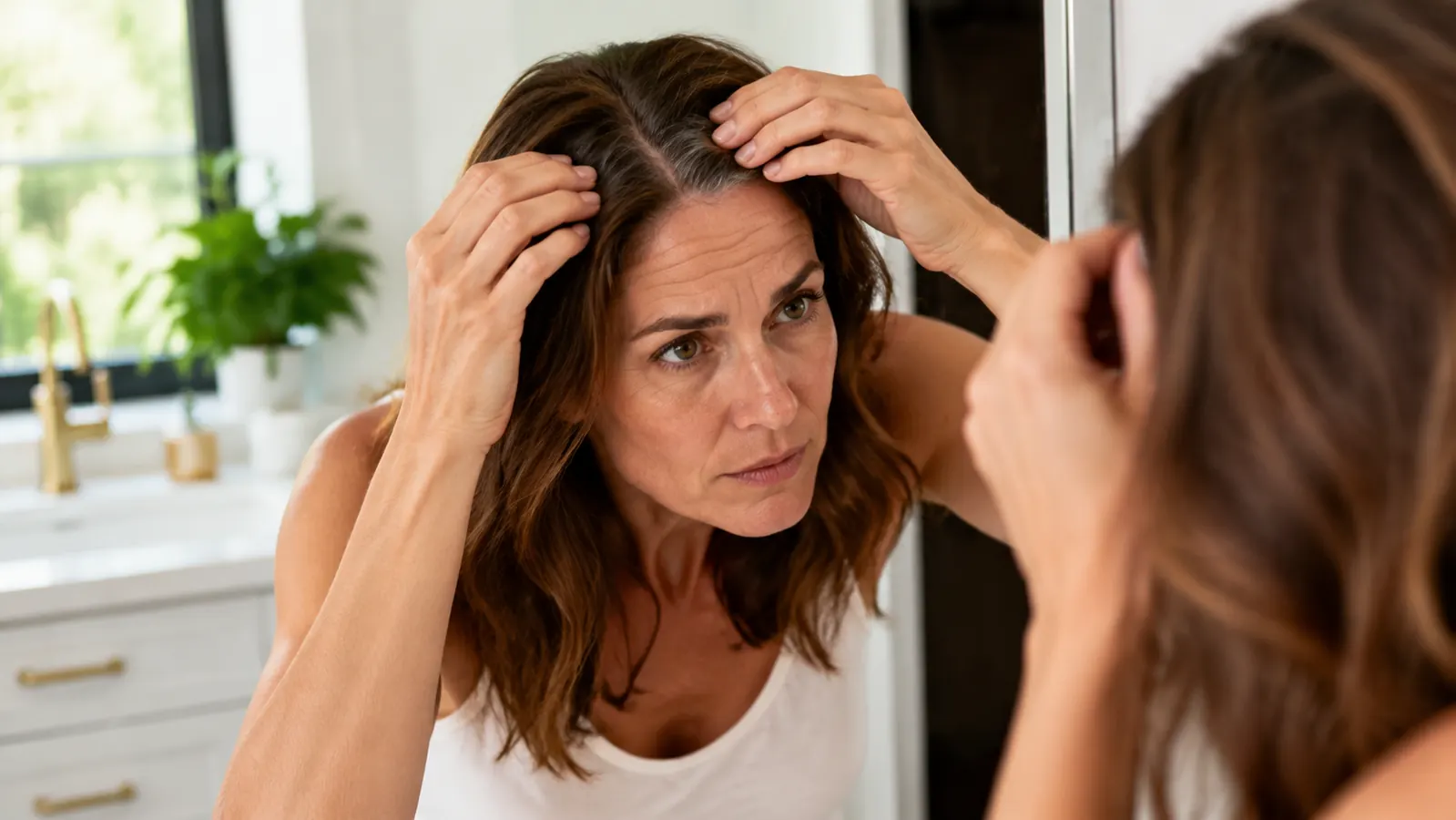
My hair gets oily fast. Not by day three, by the end of day one if I've worked out or worn a hat. For years that meant washing every single morning, which is its own kind of exhausting when you're trying to get out the door before 7am with a toddler underfoot and a lunch to pack. I started using Batiste Dry Shampoo in the Tropical scent back in January, mostly out of desperation after a friend's wedding weekend where I had zero time to wash between the rehearsal dinner, the ceremony, and brunch the next morning. Six months and roughly nine cans later, I have a pretty clear picture of what this $12 drugstore staple can and can't do.
I'm not a hairstylist. I'm someone with fine, dark blonde, color-treated hair who was tired of the wash-dry-repeat cycle wrecking both my morning schedule and my ends. This review covers what happened when I actually leaned on Batiste as a real part of my routine instead of an emergency-only product, week after week, through humidity, workouts, and one very stressful road trip with no hotel shower in sight. I also want to be upfront that I went into this a little skeptical, because I'd tried two other drugstore dry shampoos in years past and hated both of them enough to swear off the category entirely.
The Quick Verdict
Genuinely stretches wash days by two to three days for oily-prone roots, but you have to brush it out well or you'll see white cast, especially if your hair is darker than mine.
Amazon Check Today's Price →Tired of washing your hair every single day just to look presentable?
Batiste's Tropical dry shampoo absorbs root oil in under a minute and lets you stretch wash days without the greasy-crown look. Check today's price and see why it's a repeat purchase for me.
Amazon Check Today's Price on Amazon →How I Tested It
I didn't just spray it once and call it a review. From January through June I used Batiste on wash days two and three, meaning I'd wash and air-dry or blow-dry my hair on day one, then use Batiste the next morning and the morning after that before washing again. Some weeks I pushed it to a fourth day when I had back-to-back plans and no time for a full wash. I tracked how my roots looked and felt each morning, how much product I needed to use, and whether I could tell the difference between a freshly sprayed section and one I'd missed entirely.
I also tested it under stress conditions on purpose: after hot yoga, after a humid outdoor wedding in July-like heat back in April, and on a 90-degree day with no air conditioning in my car for a three-hour drive. If it was going to fail, I wanted to know exactly where and why, not just take the marketing copy's word for it. I even tried it once straight out of the shower on damp hair just to confirm it does nothing useful there, since I'd seen someone online claim it works as a pre-styling texturizer, and I can report that claim did not hold up in my bathroom.
My hair is fine, past-shoulder-length, and colored every ten to twelve weeks at a salon, so I was also paying close attention to whether repeated use dried it out or dulled the color between appointments. I kept a small note on my phone logging each application date, how many sprays I used, and a rough 1-to-10 rating of how my roots looked by early afternoon, which turned out to be more useful than I expected once I had a few months of data to look back on. By April I had enough entries to notice patterns I wouldn't have trusted from memory alone, like how much worse day three felt on weeks I was also sweating through workouts versus weeks I wasn't.
How It Performs on Actual Oily Roots
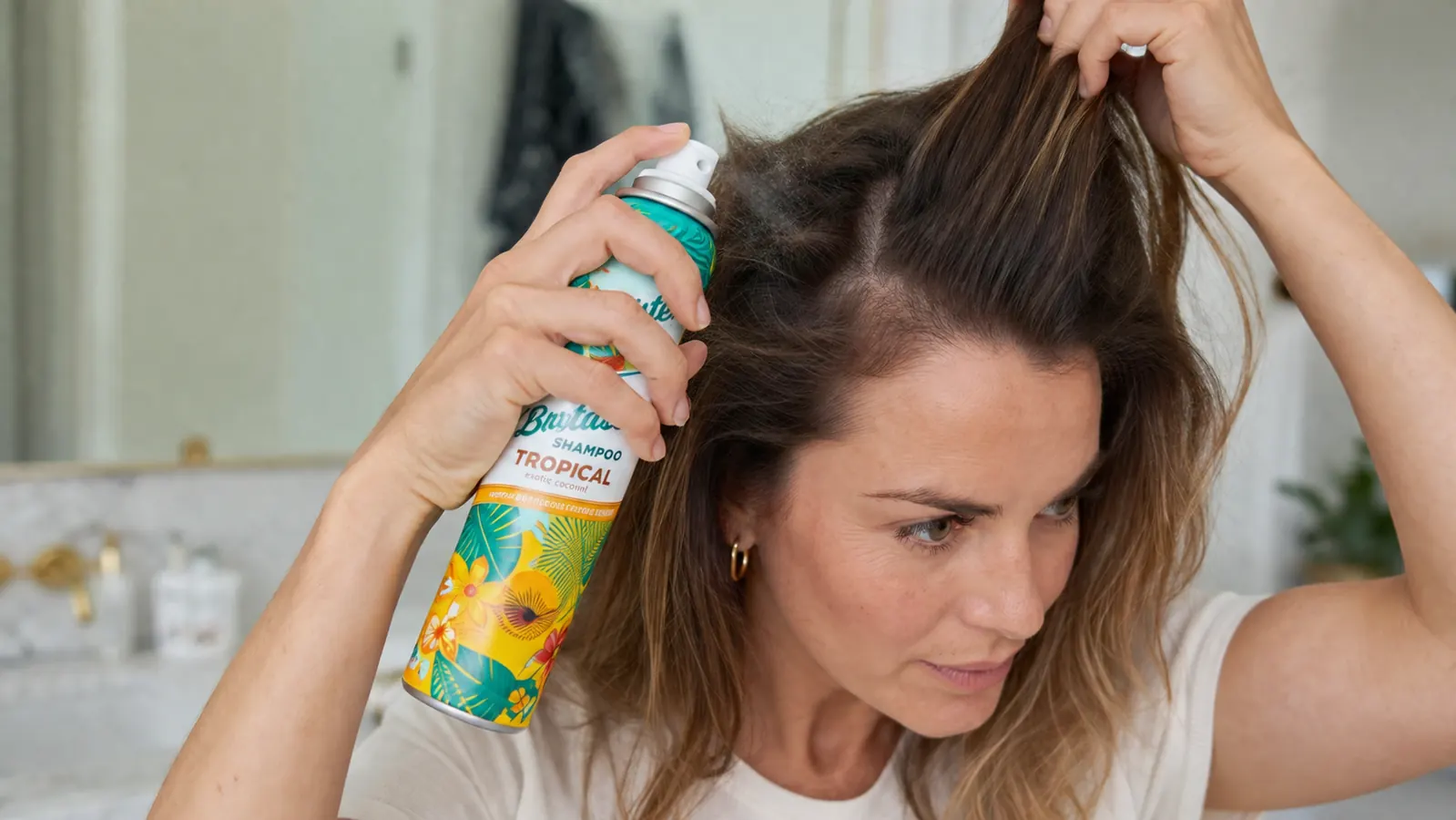
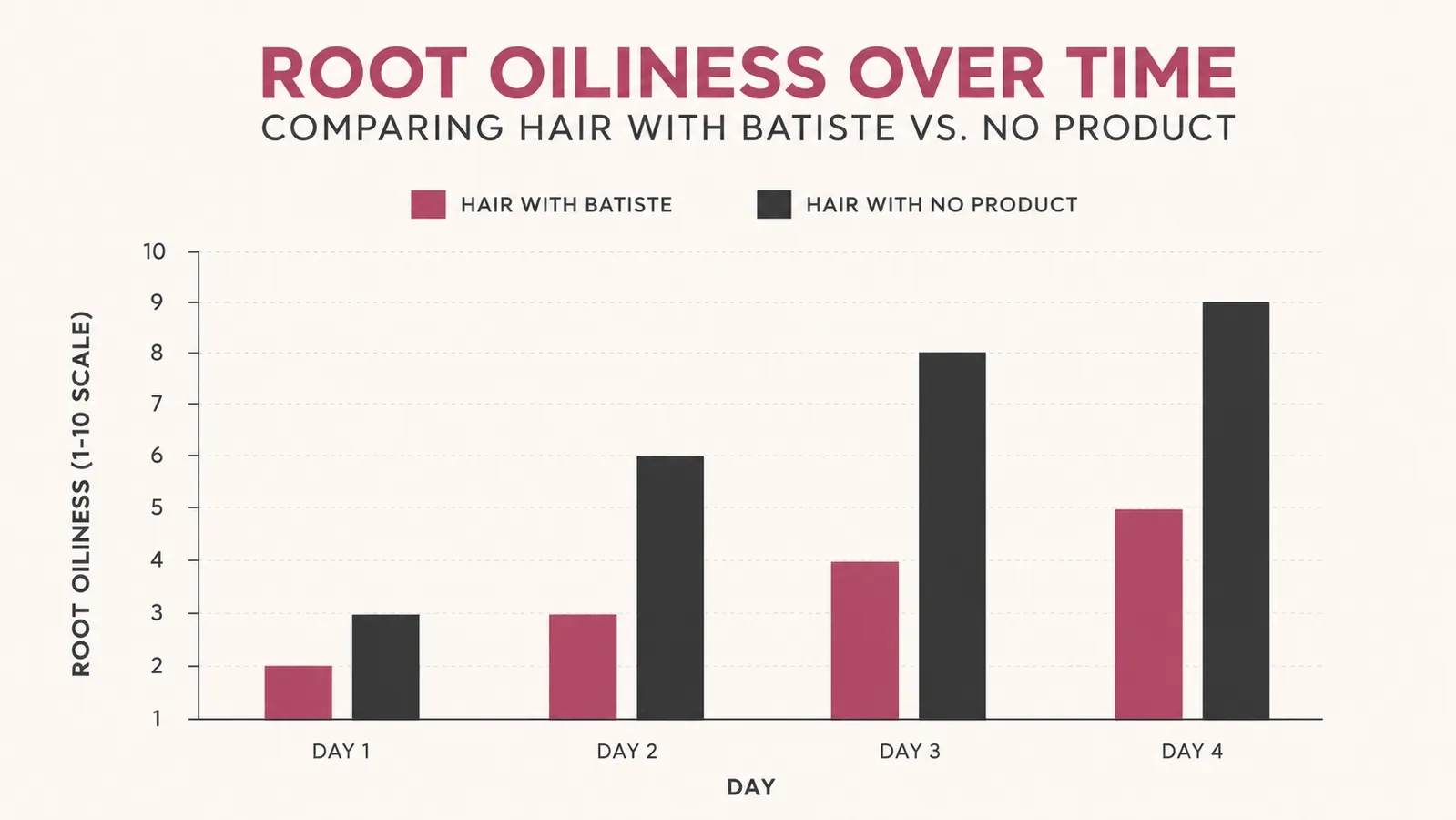
The core job of a dry shampoo is absorbing oil at the scalp, and this is where Batiste earns its reputation. On a normal day-two application, I'd section my hair into four or five parts, spray about six inches from the roots for two to three seconds per section, wait a full minute, then work it through with my fingers or a brush. Within that minute the powder in the formula visibly soaks up the shine along my part line. By the time I brushed it out, my roots looked like I'd just blown them dry, not slept on them for eight hours.
Where it starts to work harder is day three. My roots by then aren't just shiny, they're a little heavier and flatter, and one application isn't always enough. I found I needed a slightly heavier hand and a longer wait time, closer to ninety seconds, before brushing through thoroughly. It still worked, but it wasn't a one-spray miracle by that point, and I noticed I was going through cans faster on weeks I leaned on day-three applications more than usual. Day four was hit or miss and honestly felt like I was asking a lot from a $12 can, though it still beat showing up to a meeting with visibly greasy roots.
The Tropical scent is genuinely pleasant, more coconut sunscreen than heavy perfume, and it faded to nothing noticeable by midday, which mattered to me since I'm sensitive to strong fragrances lingering near my face all day at my desk job. A couple of coworkers actually asked what smelled so good on a day I'd sprayed heavier than usual, so it's not subtle right after application, but it settles quickly. I also tried the Original scent in one can midway through the test, mostly for comparison, and while the oil absorption performed about the same, I ended up going back to Tropical because I genuinely looked forward to that first spritz in the morning instead of dreading it.
The White Residue Problem, and How I Solved It
This is the complaint I see most often about Batiste, and I want to be straight with you: it's a real issue if you rush the application. In my first two weeks I had a couple of mornings where I sprayed too close to the scalp, didn't wait long enough, and walked out the door with a faint gray-white cast along my part. My hair is on the lighter side, so it was mild and mostly hidden once I moved my part slightly, but I've heard from darker-haired friends who tried it that the residue is much more obvious for them, sometimes visible from a few feet away.
The fix that worked for me: hold the can further back, six to eight inches instead of two or three, use short one-second bursts instead of one long continuous spray, and give it a full sixty to ninety seconds before touching it. Then brush thoroughly, not just a quick pass, working from roots to ends in small sections. Once I adjusted my technique around week three, the residue issue basically disappeared and I stopped thinking about it as a risk at all. A blow dryer on the cool setting for ten seconds after application also helps it disappear faster if you're in a hurry and don't have time to wait it out naturally.
If you have dark brown or black hair, I'd still recommend patch-testing on an inside section first, or looking at Batiste's darker-hair specific formulas, because even with perfect technique, lighter powder on very dark strands is going to be more visible than it was on my hair. I tested a small section on my sister-in-law, who has nearly black hair, and even with careful application she still needed a bit more brushing and a finishing comb to fully work it in before it looked natural. She ended up using a teasing comb afterward to break up any remaining powder near her crown, a step I never needed with my own lighter roots, and she still said she could catch a faint dusty look under bright kitchen lighting even after all that extra effort.
What Happened to My Color-Treated Hair Over Six Months
This was my biggest worry going in. I've had dry shampoos in the past leave my ends feeling like straw after a few weeks of regular use, and I did not want to undo a $140 color appointment with a drugstore spray. Six months in, I haven't noticed any extra dryness or fading that I can attribute to Batiste specifically. My colorist actually commented in April that my ends looked healthier than my last visit, though I'll credit some of that to also cutting back on daily heat styling since I wasn't washing and blow-drying as often.
I did notice that on weeks I used Batiste four or five times, my scalp got a little itchier by the end of the week, which is a fairly normal response to a buildup of dry shampoo and natural oil sitting at the roots longer than usual. A proper clarifying wash once a week kept that in check and reset everything, so I never let more than seven days go by without a real shampoo, even during my heaviest dry-shampoo stretches. I switched to a clarifying shampoo specifically for that weekly reset rather than my regular color-safe one, and that combination is what finally stopped the itchiness from creeping back week after week.
Other Dry Shampoos I Tried Along the Way
I didn't stick with Batiste blindly for six months without trying anything else. Somewhere around month two I picked up a powder-based dry shampoo from a natural beauty brand, curious whether the tapioca-starch formula would leave less residue than an aerosol spray. It absorbed oil almost as well, but the application was messier and slower, since I had to tap the loose powder directly onto my roots and rub it in by hand instead of just spraying and brushing. It also didn't smell like anything, which some people prefer, but I missed having a light scent to freshen things up on a long day.
I also tried a more expensive salon-brand aerosol a coworker swore by, priced around $28 a can. It worked beautifully on day two but honestly wasn't noticeably better than Batiste for the price difference, and it ran out faster because the can was smaller. For the cost, I couldn't justify switching over permanently. The one place it did outperform Batiste was on day four, where it held up slightly better on my roots, but that's a narrow use case for most people who aren't stretching washes quite that far.
By month four I'd settled back into Batiste as my everyday pick and kept the powder formula around only for travel, since it doesn't count as an aerosol for carry-on restrictions. That combination, Batiste at home and powder in my travel bag, ended up being the most practical setup I landed on.

Who This Is For
If you have naturally oily roots, work out in the morning before your day starts, or just want two or three extra mornings a week without a full wash-and-style routine, this is a smart, cheap addition to your bathroom shelf. It's also great for travel since it doesn't require water or an outlet, and for postpartum or new-parent stretches when a shower is a luxury you don't always get. Fine to medium hair in particular tends to respond well because the added texture from the powder gives some welcome volume at the root, which was an unexpected bonus for me on days I wanted my hair to look fuller before an evening out. If you're weighing whether a $12 can is worth adding to your routine, think about it in terms of time as much as money. On the mornings I used Batiste instead of washing, I cut about fifteen minutes off my routine between the shower, the blow dry, and the flat iron I'd normally reach for on freshly washed hair, and that time savings ended up mattering to me more than the dollar cost ever did.
What I Liked
- Genuinely absorbs oil and extends wash days by two to three days for most hair types
- Pleasant, not overpowering Tropical scent that fades by midday
- Adds real volume at the root, useful even on non-emergency days
- Affordable at around $12 a can and widely available at drugstores and grocery stores
- Works well as a touch-up between blowouts, not just a wash-day skip
Where It Falls Short
- Visible white residue if applied too close or not brushed out thoroughly, worse on darker hair
- Loses effectiveness by day four for genuinely oily scalps
- Can cause mild scalp itchiness with heavy repeated use if you skip clarifying washes
- The can empties faster than you'd expect if you're spraying multiple times a week
By week three, once I adjusted my spray distance and actually waited the full minute before brushing, the white residue complaint I kept reading about basically stopped being my problem.
Who Should Skip It
If your hair is very dark and you're not willing to adjust technique or patch test, or if you have a sensitive, easily irritated scalp, I'd think twice before making this a five-day-a-week habit. Anyone hoping for a wash replacement rather than a wash extender is also going to be disappointed. This is a tool for stretching two or three good hair days out of one wash, not a way to stop washing your hair altogether. If you have very fine hair that already tends toward flat and greasy by midday even after washing, you may find yourself reapplying more than you'd like, which eats into the cost savings and means going through cans faster than the once-or-twice-a-week user. And if you're the type who forgets to brush thoroughly or wait out the full minute before running out the door, you're more likely to end up frustrated by the residue than happy with the extra day of clean-looking roots.
Ready to buy back your mornings without sacrificing how your hair looks?
After six months and nine cans, Batiste Tropical Dry Shampoo earned a permanent spot next to my sink. See today's price on Amazon and give your wash routine a break.
Amazon Check Today's Price on Amazon →