
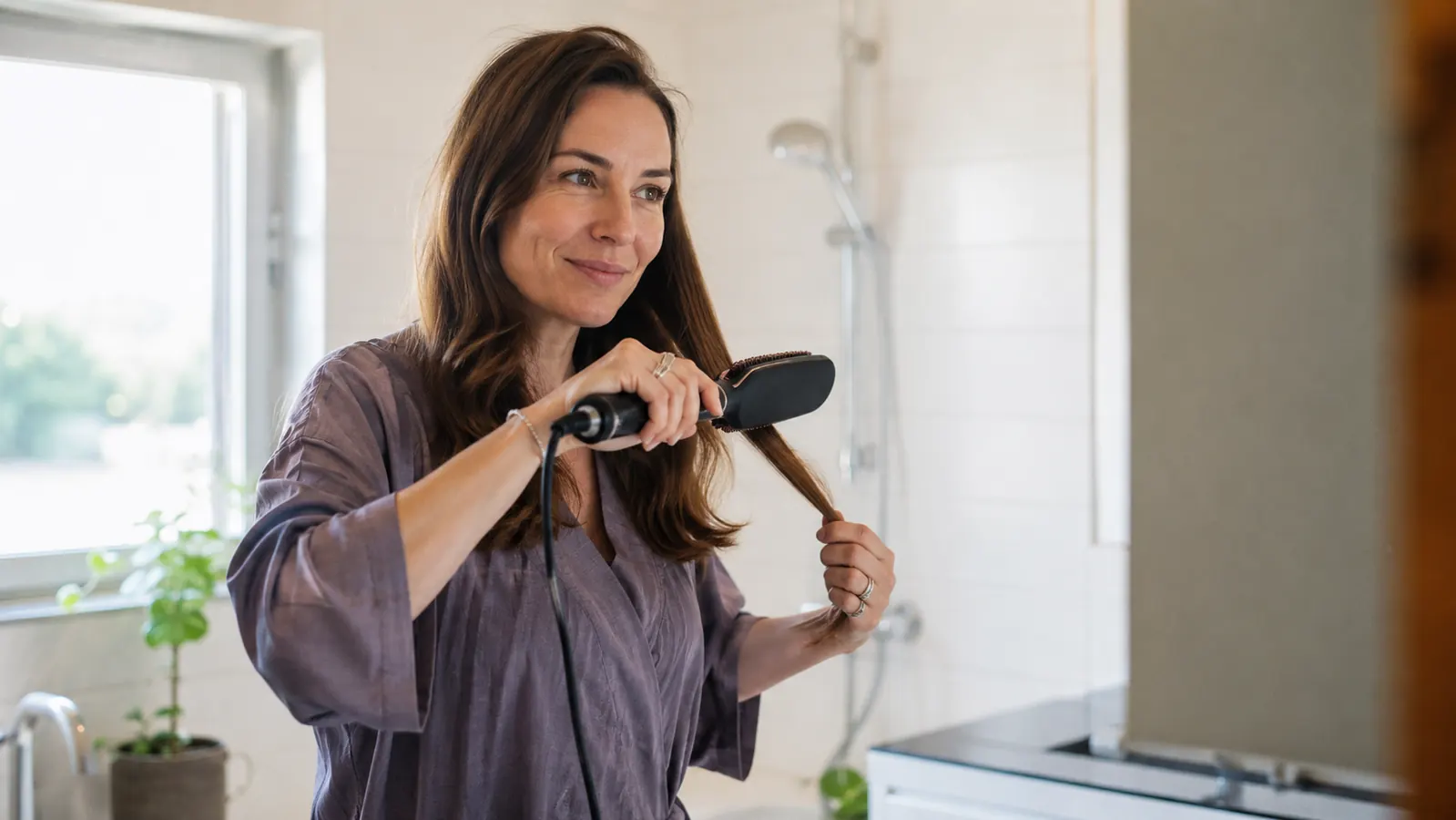
I bought the TYMO Ring straightener brush on a whim last spring because I was tired of setting my alarm 25 minutes earlier just to fight my flat iron before work. My hair is thick, past-shoulder-length, and it takes a real beating from color every 8 weeks. I did not expect a $39.85 brush to change my morning routine. Four months later, it's the only hot tool sitting out on my counter.
This isn't a first-impressions review. I've used this thing close to five days a week since March, through humid Florida mornings, a trip to Colorado where the dry air made my ends brittle, and one memorable week where my toddler kept trying to grab the cord while I styled. I'm going to walk through exactly what happened to my hair, my routine, and my patience over that stretch, including the parts that annoyed me, because a review that only tells you the good stuff isn't actually useful to you.
The Quick Verdict
A genuinely time-saving tool for thick or wavy hair that wants to be smooth, not silky-straight. Snags a little on tangled ends and runs hot on the highest setting, but it earned a permanent spot on my counter.
Amazon Check Today's Price →Still fighting your flat iron every morning?
The TYMO Ring brush cut my styling time down by more than half. Check today's price and see if it's in stock.
Amazon Check Today's Price on Amazon →How I've Used It
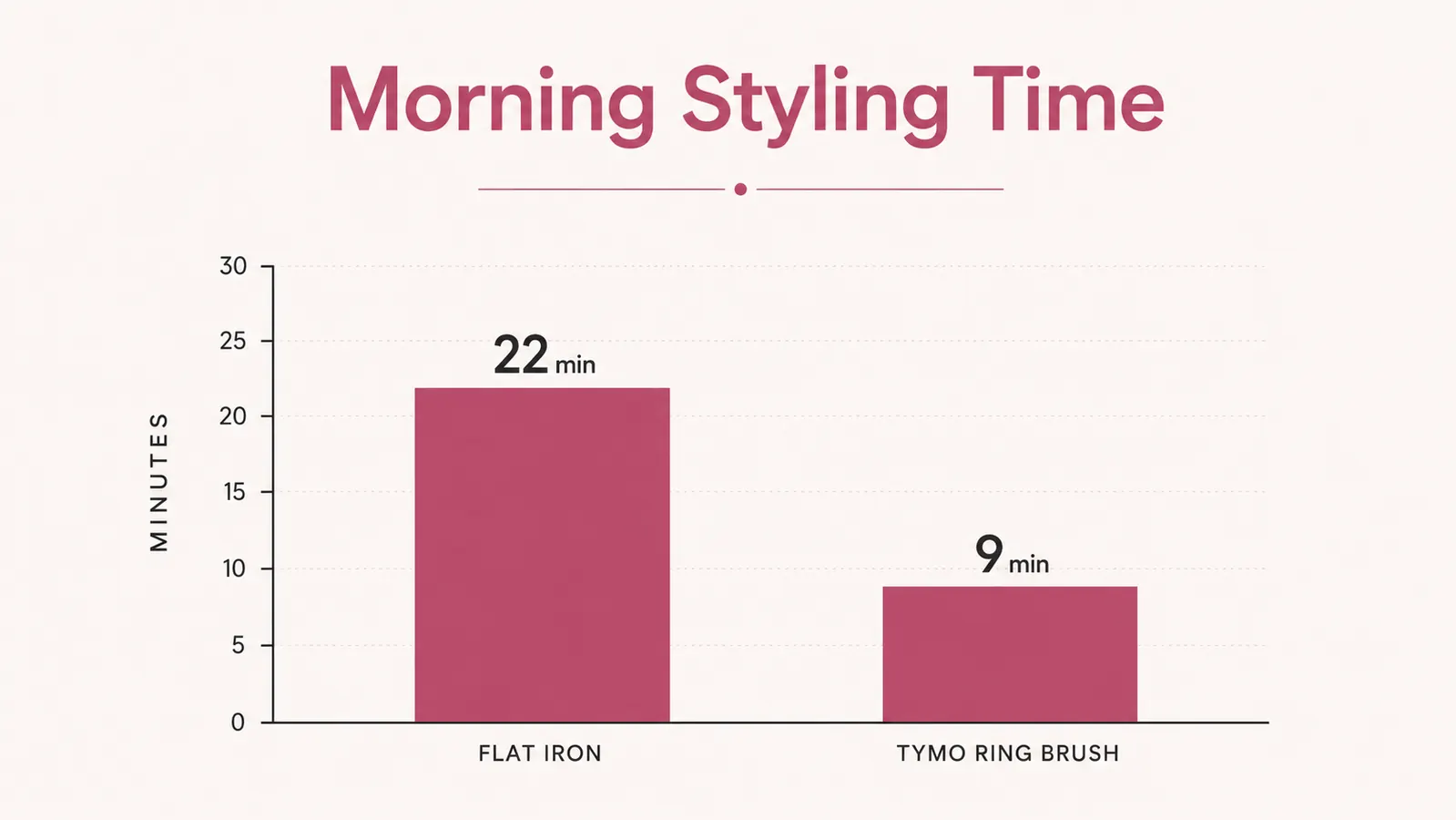
My routine is boring and repeatable, which is exactly why it's a good test. I towel-dry, apply a heat protectant, blow-dry to about 80% dry, then run the TYMO Ring through in 1 to 1.5 inch sections starting about two inches from my scalp. I do two to three passes per section depending on how much the day's humidity is working against me. Total time, including the two minutes it takes to heat up, is usually under 10 minutes.
I tested it at three heat settings over the four months: the low setting (around 265°F) for quick touch-ups on day-two hair, the middle setting for normal daily use, and the highest setting (about 450°F) exactly twice, both times on stubborn regrowth near my part. I don't recommend living on that top setting. It works, but it's hotter than my hair actually needs for regular days.
By week three I'd settled into a rhythm where I barely think about it anymore, which is the real test of any tool. The ones that require constant fiddling get shoved in a drawer. This one didn't. I've also handed it to my sister-in-law twice when she stayed over for the weekend, and both times she had it figured out within one pass, no tutorial needed. That matters more than it sounds like it should, because half the hot tools I've owned came with a learning curve steep enough that I gave up before I got good results.
One thing I didn't expect was how much this changed my relationship with second-day hair. I used to wash every single morning partly because I didn't trust myself to fix flat, oily-looking roots with just a flat iron. Now I use dry shampoo at the roots, run the TYMO Ring through the lengths for a minute or two, and it looks refreshed enough to skip a wash entirely. That alone has probably saved me more time over four months than the styling itself.
The Bristle and Ceramic Plate Setup
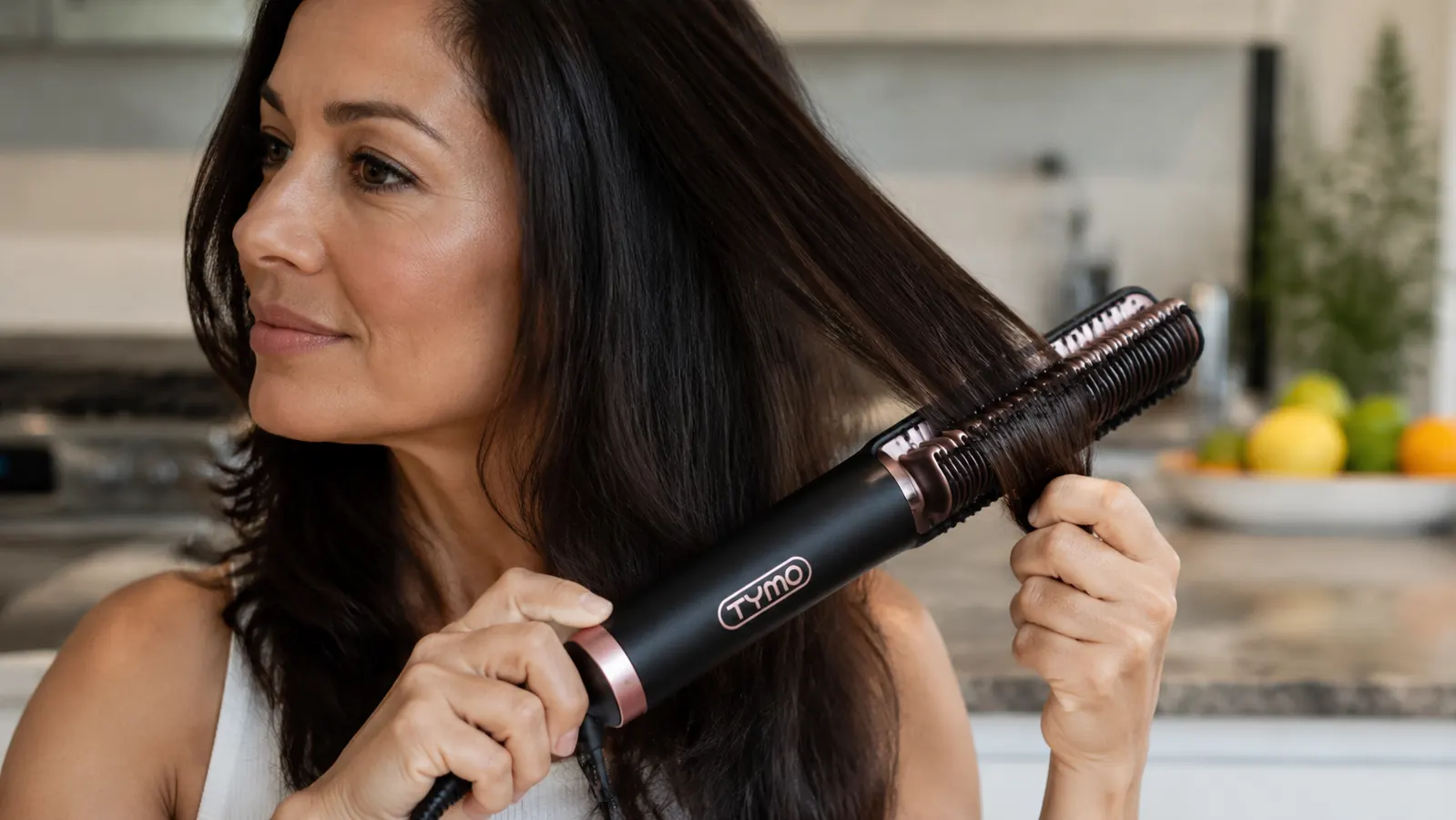
The design is a rotating brush head with a ceramic-coated heating plate on one side and nylon bristles on the other, so it's combing and straightening in the same motion. That sounds gimmicky until you actually use it, because it eliminates the separate detangling step I used to do with a paddle brush before ever touching hot tools.
On clean, dry hair the bristles glide through with no resistance. On hair that's even slightly tangled, which happens most mornings with a kid in the house, I do feel some catching. It's not painful, but it's noticeable enough that I now keep a wide-tooth comb nearby for the worst knots before I bring the brush in. That's the one prep step I'd tell a first-time buyer not to skip.
The ceramic plate itself heats evenly across its width, which matters more than people realize. I've used cheaper straightener brushes in the past where the center runs hotter than the edges and you get an uneven result strand to strand, with the middle section looking sleek while the outer edges are still a little wavy. I didn't get that here. The heat felt consistent from the first section to the last, front to back, root to end.
The rotating barrel design also means I'm not gripping and twisting my wrist the way I would with a flat iron to get an even bend at the ends. The brush rotates slightly as I pull it through, which does a lot of the shaping work for me. My wrist used to ache a little after long styling sessions before big events. That hasn't happened once since I switched. The handle itself stays cool to the touch even after ten straight minutes of use, which I only noticed because I've grabbed the barrel of a flat iron by accident more than once over the years.
How It Performs Over Time, Not Just Day One
Day one, any straightener brush looks impressive. The question I actually cared about was whether it would still work the same in month three, after regular use, hard water buildup, and the inevitable product residue that coats every hot tool eventually. A lot of reviews online are written after a week of use, and a week isn't long enough to know if a tool holds up.
At the two-month mark I noticed slightly more drag on the plate, which I traced back to dry shampoo and leave-in conditioner buildup. A quick wipe with a damp cloth after it cools (never while it's on) brought it right back to smooth. This isn't unique to TYMO, every hot tool needs this kind of light maintenance, but nobody tells you that when you buy one, so I'm telling you now. I do this cleaning about once every two to three weeks and it takes under a minute.
The auto shut-off feature, which kicks in after about an hour of inactivity, has saved me from myself at least four separate times when I got distracted mid-routine by breakfast chaos. Small feature, genuinely useful, especially if you're the type who's occasionally left a flat iron on the counter wondering all day if you actually turned it off.
My hair color has held up fine. I was nervous about heat damage on top of my regular color appointments, but because I'm doing fewer total heat passes than I did with a traditional flat iron, my stylist actually commented in June that my ends looked healthier than they had in a while. I can't promise that's purely the tool and not also the fact that I stopped over-processing with a curling iron on top, but it's a data point worth sharing.
The cord itself has held up without any fraying near the base, which is usually the first place a hot tool cord fails from repeated bending. I coil it loosely rather than wrapping it tight around the handle, which probably helps, but four months of daily wrapping and unwrapping is a real stress test and it's passed so far.
Testing It in Different Climates
The Colorado trip in June ended up being the most useful stress test I didn't plan for. My hair usually goes brittle and static-y in dry mountain air, and I half expected the brush to just push that frizz around instead of taming it. It surprised me. Running it through at the middle heat setting each morning, the results held longer than they normally do at home, probably because the bristles were distributing what little natural oil my hair had more evenly instead of just blasting heat through dry strands.
Back home in Florida humidity, the real enemy of any straightening tool, the smooth finish starts to soften by early afternoon on the worst days. That's true of basically every straightening method I've tried, so I don't hold it against this one specifically. A quick 60-second touch-up with the TYMO Ring on day-two humidity frizz works better than trying to re-iron with a flat iron, because I'm not adding a second full heat pass to already-stressed strands.
What I Considered Instead, and Why I Stuck With This One
Before I bought the TYMO Ring, I had two other options open in a shopping cart for about a week. One was a well-known ceramic flat iron from a salon brand that a stylist recommended, priced almost three times as much. The other was a cheaper no-name straightener brush I'd seen on social media that looked nearly identical to this one in photos.
I skipped the salon iron because I already owned a decent flat iron and knew the real problem wasn't iron quality, it was the time and skill a flat iron demands for a smooth all-over result on hair as thick as mine. I skipped the no-name brush after reading enough reviews mentioning inconsistent heat and short lifespans to make me nervous. TYMO had the reviews and the track record to back up the price, and four months in, I think that research paid off. It hasn't needed a single repair or replacement part, and the rotating head still moves as smoothly as it did on day one.
Who This Is Best For
If your hair is thick, wavy, or moderately frizzy and you want a smooth, low-maintenance finish without a full salon blowout look, this is a strong fit. It's especially good for people who are new to hot tools or nervous about burning themselves, since the brush bristles create a natural buffer between the plate and your scalp in a way a flat iron just can't.
It's also a genuinely good travel tool. Mine has made two flights in a toiletry bag with zero issues, and the dual voltage means I didn't have to think twice about it in Colorado. For anyone who packs light and doesn't want to bring both a straightener and a brush, this one tool does the job of both.
What I Liked
- Cuts styling time roughly in half compared to a traditional flat iron
- Combs and straightens in one motion, less prep work
- Even heat distribution across the plate
- Auto shut-off after an hour
- Dual voltage, travel-friendly
- Doesn't require serious skill to get a good result
Where It Falls Short
- Catches slightly on tangled or knotted sections
- Highest heat setting runs hotter than most hair actually needs
- Needs occasional cleaning to prevent product buildup on the plate
- Won't get you pin-straight, glass-like results the way a flat iron can
- Cord is a bit shorter than I'd like for a large bathroom
It doesn't make my hair look like a flat iron did it, and honestly, that's the point. It looks like my hair, just smoother.

What I'd Tell a Friend Shopping for One
The biggest mental shift for me was accepting that this tool gives you smooth, not stick-straight. If you're chasing that glass-like, ironed-flat look for a special event, a traditional flat iron with a narrower plate is still going to win that specific job. But for a daily driver that gets you out the door looking put together, this beats a flat iron in almost every practical way that matters on a Tuesday morning.
I'd also tell them to buy a heat protectant spray at the same time if they don't already use one. I use one every single time, no exceptions, and I credit that as much as the tool itself for how my ends have held up. And I'd tell them not to expect miracle results the first time out. It took me two or three uses to figure out the right section size and pass count for my particular hair, and once I found that rhythm, the results got noticeably more consistent.
The last thing I'd say, because I wish someone had told me, is to section your hair with actual clips before you start rather than eyeballing it. I resisted this for the first month because it felt like an extra step, but grabbing consistent 1 to 1.5 inch sections instead of guessing is the difference between an even, all-over result and a few random smooth pieces surrounded by hair you missed.
Who This Is For
People with thick, wavy, or frizz-prone hair who want a faster morning routine and a smooth, natural finish. Also a great pick for anyone newer to styling hot tools, teenagers learning to do their own hair, or anyone who's burned themselves on a flat iron enough times to want something with a built-in safety buffer. It's also worth a look for anyone who travels often and is tired of packing two separate hot tools to get the same result this one gets in a single pass.
Who Should Skip It
If you have very fine or thin hair, the bristle rows can create a bit too much texture and volume rather than sleek smoothness, so a smaller flat iron may serve you better. And if you need pin-straight, red-carpet-level results every time, this brush gets close but isn't quite that tool. Anyone with very short hair (think pixie cut) also won't get much use out of the brush design, since there's not enough length for the bristles to properly grab and guide. If your bathroom outlet is far from the mirror, the shorter cord is also worth thinking about before you buy, since I've had to rearrange where I stand a few times to reach comfortably.
My mornings got 15 minutes shorter. Yours could too.
Four months in, this is still the first thing I reach for. See today's price on Amazon and decide for yourself.
Amazon Check Today's Price on Amazon →