

My face used to feel like it was auditioning for a bad day by 9am. I'd wash it, pat it dry, and within ten minutes my cheeks would be tight, a little pink along the nose, and itchy right at the jawline. That was my normal for years, through a rotation of foaming cleansers that promised a squeaky clean feeling and delivered exactly that: squeaky, and clean, and angry skin underneath.
In April, after a particularly bad flare that had me avoiding makeup for a week straight, I switched to the La Roche-Posay Toleriane Hydrating Gentle Cleanser. It's the one that shows up in nearly every dermatologist-recommended list for reactive skin, and it's priced closer to a drugstore cleanser than a prestige one, which surprised me the first time I checked. I've now used it every morning and most nights for three months, so this isn't a first-impressions post. This is what it actually did to skin that has rejected almost everything else I've tried.
The Quick Verdict
A genuinely gentle, non-foaming cleanser that calmed my redness and tightness within about three weeks, with zero fragrance irritation and a texture that never strips.
Amazon Check Today's Price →Tired of Your Face Feeling Tight the Second You Rinse?
That tightness isn't your skin being clean. It's your barrier being stripped. The Toleriane Hydrating Gentle Cleanser is formulated to wash without that reaction, and it's the one my skin finally stopped fighting.
Amazon Check Today's Price on Amazon →How I Tested It
I'm not a dermatologist, just someone with skin that flags easily. I have mild rosacea that was diagnosed two years ago, plus a habit of reacting to fragrance in skincare within a day or two of introducing something new. My routine before this was simple by necessity, because anything with too many active ingredients set me off within a week. I used the Toleriane cleanser morning and night for the first month, then settled into once a day at night with a splash of lukewarm water in the morning, which is closer to how I expect most people will actually use it long term.
I tracked how my skin felt on a simple 1 to 10 scale for redness and tightness, checked in the mirror under the same bathroom light each morning, and kept notes on my phone so I wasn't relying on memory to fill in the gaps later. I also didn't change anything else in my routine for the first six weeks. Same moisturizer, same sunscreen, same laundry detergent, same pillowcase washing schedule. I wanted to isolate what the cleanser itself was doing, not what a whole new routine was doing, because it's easy to credit one product for a change that three products caused together.
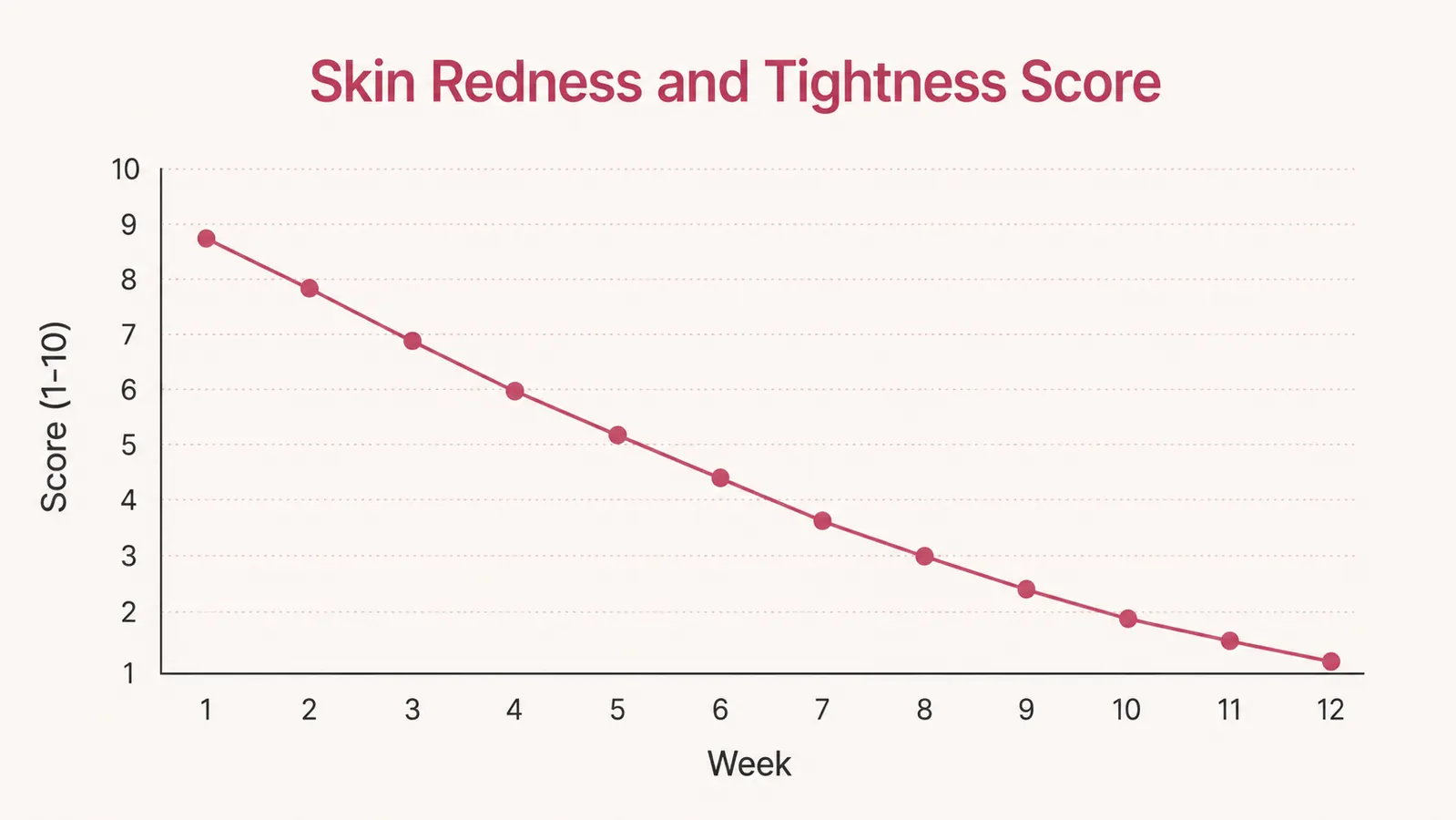
By week three, my morning tightness score had dropped from a consistent 7 to a 3. That's not a dramatic transformation story, it's just my face not fighting me every day anymore, which after years of that being normal felt like a pretty big deal. I also started photographing my bare face under the same window light every Sunday morning, which sounds obsessive but turned out to be the most useful thing I did, because day-to-day memory of your own skin is surprisingly unreliable.
I also kept a small paper log next to the sink for the first month, just a column of dates and a one-word note like tight, calm, or flushed, because I didn't trust myself to remember accurately once the improvement started. Looking back at that log now, the word tight shows up eleven times in the first two weeks and only twice after week six, both times tied to a heat wave, not the cleanser itself. Small tracking like that is tedious, but it's the difference between a review that's honest and one that's just a nice memory of feeling better.

What's Actually in the Bottle
The formula leans on niacinamide, glycerin, and La Roche-Posay's thermal spring water, and it skips soap entirely. That last part matters more than people realize. A lot of face washes marketed as gentle still use sulfates that lather, and lather is often the thing stripping your skin's natural oils in the first place. The Toleriane cleanser doesn't foam. It goes on more like a lightweight lotion, and you massage it in rather than working up suds, then rinse or wipe it away with a soft cloth. That thermal spring water is a La Roche-Posay signature across most of their sensitive-skin line, sourced from a specific spring in France that's been used in dermatology clinics for decades, which is more backstory than most drugstore cleansers bother to have.
The first time I used it I genuinely thought it wasn't doing anything, because there was no tingle, no lather, no tight squeaky feeling when I rinsed. I almost went back to my old cleanser that same week out of habit, thinking gentle meant ineffective. It took about four or five uses before I trusted that clean doesn't have to feel like a chemical peel. That mental shift took longer than the physical one, honestly.
It's also fragrance-free, which for me is non-negotiable. I've had reactions to "lightly scented" products that claimed to be for sensitive skin and still had enough fragrance to make my cheeks flush within a day. Three months in, I've had zero fragrance-related irritation from this one, and I've stopped even checking the ingredient list out of habit before restocking, which is its own small kind of trust.
I did some digging into niacinamide specifically, since it shows up in so many products now that it's almost background noise on an ingredient list. At the low, stable concentration La Roche-Posay uses here, it's mostly doing barrier-support work rather than the brightening or pore-refining job it gets marketed for in serums. That distinction actually matters for someone like me. A cleanser isn't the place I want an ingredient working hard on pigmentation or texture. I want it calming things down and getting out of the way, and that's exactly the lane this formula stays in.
Redness and Tightness Over Time
Week one was basically neutral. My skin didn't get worse, which after so many bad reactions felt like a relief on its own, but it didn't dramatically improve either. Weeks two and three are where I noticed the real shift. The tight feeling after washing, which had been automatic for years, started showing up less and less. By week four I stopped expecting it, which is a strange thing to notice about your own face.
The redness along my nose and cheeks, which flares with stress, weather changes, and honestly just existing some days, became less intense and calmed faster when it did flare. I still get pink after a hot shower or a spicy meal. That hasn't gone away and I didn't expect a cleanser to fix rosacea entirely. But the baseline redness, the kind that was just always a little there even on calm days, is noticeably less always there now, and my concealer routine has gotten simpler because of it.
Around month two I got lazy and skipped my sunscreen for a few days during a heat wave. My skin flared up badly, redness and a rash-like texture across both cheeks that lasted about five days. I kept using the Toleriane cleanser through that flare instead of switching to something medicated, mostly out of curiosity, and it didn't make things worse, which is more than I can say for a couple other cleansers I've tried during a flare in the past. It didn't fix it either. That's not its job. But it didn't fight me while my skin was already upset, and that distinction matters more than marketing copy usually admits.
By month three the swings had gotten smaller across the board. Even my worst weeks, the ones with weather changes or a stressful stretch at work, didn't come close to my old baseline. I'd land at a 4 or 5 on a rough day instead of the 7 or 8 that used to be routine, and I'd usually be back down to a 2 or 3 within a day or two instead of riding out a week-long flare. That kind of faster recovery ended up mattering more to me than the calm days themselves, since it meant a bad night of sleep or a stressful deadline stopped being a guaranteed multi-day skin event.
How It Compares to What I Tried Before
Before this I cycled through three other "gentle" cleansers over about two years, and all three eventually caused some kind of reaction, whether it was a subtle sting on application or a slow build of redness over a few weeks that I didn't connect to the product until I stopped using it and things calmed down. One had a light rose scent that seemed harmless until my skin disagreed. Another foamed just enough to leave that tight, dry feeling I was trying to escape in the first place.
What sets the Toleriane cleanser apart isn't some flashy ingredient, it's what it leaves out. No soap, no fragrance, no foaming agents aggressive enough to strip the barrier. It's a boring formula in the best way, and boring is exactly what reactive skin usually needs. I also considered a well-known ceramide cleanser around month two, since it kept popping up in the same recommendation lists, but I didn't want to introduce a variable mid-test. That's a comparison I'll save for a future post, but for now this one earned its spot in my cabinet by simply not causing problems for three straight months.
I also went back and priced out what I'd spent on cleansers over those two prior years, mostly out of curiosity, and it wasn't close. Between the ones that didn't work and the samples I bought chasing a fix, I'd gone through more bottles in eighteen months than I've used of the Toleriane cleanser in three, and this one is the only bottle that's ever made it to a second purchase without hesitation. That's a small, unglamorous kind of proof, but it's the kind that actually shows up in a bathroom cabinet instead of a marketing deck.
What I Liked
- No fragrance, and genuinely no irritation in three months of daily use
- Doesn't strip or leave that tight, squeaky feeling
- Rinses clean without residue despite not foaming
- Gentle enough for daily use, morning and night
- Priced like a drugstore staple despite the dermatologist pedigree
Where It Falls Short
- Doesn't remove heavy or waterproof makeup on its own
- No lather can feel underwhelming if you're used to foaming cleansers
- Pump can clog slightly if you don't wipe the nozzle after use
- Won't treat active flares or medical-grade rosacea on its own
I stopped bracing for the tight feeling after washing my face. That's the whole review, honestly.
How I Use It Now
These days my routine is boring on purpose. At night I wash with the Toleriane cleanser, pat dry, and follow with a ceramide moisturizer. In the morning I usually just splash lukewarm water and go straight to sunscreen, saving the actual cleanser for when my skin feels like it needs it, like after a sweaty workout or a day of wearing a mask for eight hours at work. That flexibility is part of why it's stuck around. It doesn't demand a rigid schedule to keep working.
I keep a travel size in my gym bag now too, since post-workout is one of the times my skin used to flare the most. Sweat mixed with whatever product I'd used that morning was a reliable recipe for redness, and rinsing with this right after a class has cut down on that noticeably. It's a small habit, but it's the kind of small habit that adds up over three months into a face that just behaves better than it used to.
I've also started using it as a first cleanse on nights I wear sunscreen and light makeup, before a second pass with a micellar water to catch anything left behind. That two-step habit took a little trial and error to land on, mostly because I was hesitant to add any extra step to a routine that finally wasn't causing problems. But the combination hasn't reintroduced any of the tightness or redness I was trying to get away from, and my skin looks more even under makeup now than it did when I started this whole experiment in April.
Who This Is For
If your skin reacts to most things, gets tight after cleansing, or flares with fragrance and harsh actives, this is worth adding to your routine. It's also a solid pick if you're trying to rebuild a stripped barrier from over-exfoliating or one too many trendy acids, which is a common enough story that I've heard it from three different friends this year alone. It works well as a first step before a moisturizer and sunscreen routine, and it plays nicely with actives you introduce later since it's not adding any extra irritation of its own. I'd also recommend it to anyone starting a new retinoid or prescription treatment, since a calm, predictable cleanser underneath a more aggressive active gives your skin one less variable to manage while it adjusts.
It's also a good fit if you're the type who gives up on skincare routines because everything seems to backfire eventually. This is one of the few products I've used for three months straight without a single day of regret, and for someone with a track record like mine, that's a real endorsement.
I'd also point family members toward this one before recommending anything trendier. My mother has similar skin and asked what I was using after she noticed my face looked less blotchy in photos over the summer. That's about as honest a review as I can give, since she's not exactly easy to impress and doesn't read ingredient labels for fun the way I do. My sister, who has combination skin and none of my rosacea history, tried a sample from my bathroom out of curiosity and kept using it too, mostly because it didn't leave her T-zone feeling greasy or her cheeks feeling dry, which is the balance she'd struggled to find with heavier or foaming options.
Who Should Skip It
If you wear heavy makeup or SPF daily, you'll likely need a separate makeup remover or an oil cleanser first, because this one is not built to melt off a full face of foundation and waterproof mascara. And if you love the feeling of a foaming, tingly cleanse, the texture here might feel like it's not doing enough, even though it is. This is a cleanser for people who want their face to feel calm, not squeaky, so if a satisfying lather is part of your self-care ritual, you might miss it.
It's also probably not the exciting choice if you're chasing a specific active ingredient result, like fading dark spots or smoothing texture fast. This cleanser isn't trying to do that. It's a maintenance product, not a treatment, and it does that one job quietly instead of promising something flashier on the label.
And if your skin genuinely tolerates strong actives and foaming washes without any of the tightness or flare-ups I've described, you probably don't need this one specifically. There's no harm in switching, but a lot of the value here is in what it doesn't do, and if you're not currently paying a price for tolerating a stronger cleanser, that particular benefit won't feel like much of an upgrade. This is a fix for a problem, not a universal replacement for whatever's already working for you.
Three Months In, My Skin Stopped Fighting Me
If tight, red, reactive skin has been your normal for too long, this is the cleanser that finally gave mine a break. Simple formula, no fragrance, no drama.
Amazon Check Today's Price on Amazon →