
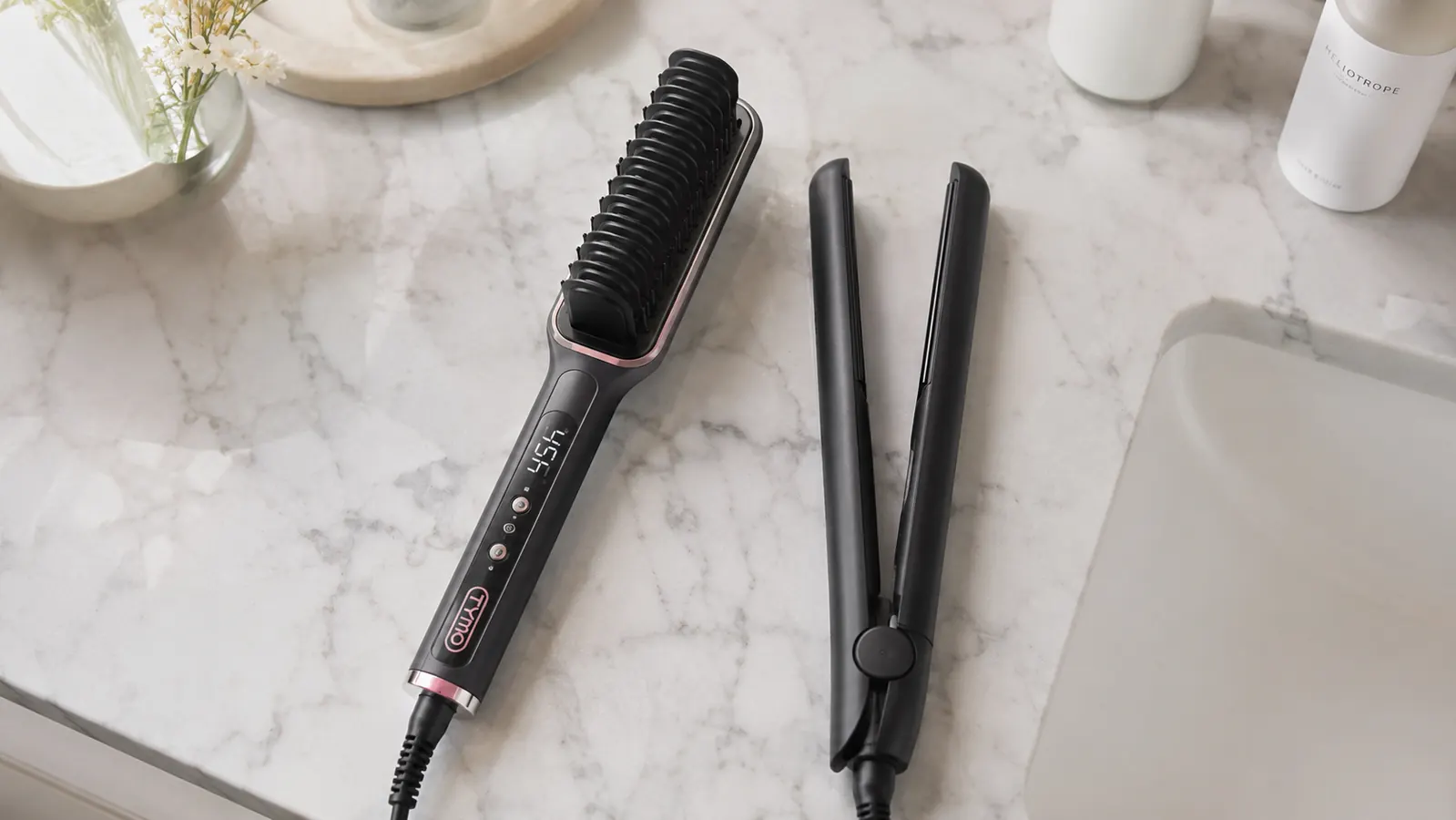
Short answer: if your main goal is getting out the door fast without frying your ends, the TYMO Ring straightener brush wins for daily use. If you do sleek, glass-flat styles for events or need max heat control for very coarse or resistant hair, a traditional flat iron still has an edge. I own both. I use one of them about five times more often than the other, and it is not the one I expected when I first bought it three years ago.
I tested the TYMO Ring straightener brush against a standard 1-inch ceramic flat iron I have owned for years, on the same head of hair, on alternating mornings over two weeks. Same shower routine the night before, same heat protectant spray, same 15 minutes I actually have before I need to walk out the door for work. I timed every session on my phone, took photos at the two-hour mark and the eight-hour mark, and paid attention to how my scalp and hairline felt afterward. I also asked my sister, who has thicker, coarser hair than mine, to run the same two-week test on her end so this was not just one head of hair deciding the whole comparison. Here is what actually separated the two tools once the stopwatch stopped mattering as much as the real-world result.
| TYMO Straightener Brush | Traditional Flat Iron | |
|---|---|---|
| Price (current) | Around $40 | Around $25 to $150 depending on brand |
| Average styling time (shoulder-length hair) | 8 to 10 minutes | 18 to 22 minutes |
| Learning curve | Usable well on day one | Takes weeks to get even sections without lines |
| Risk of visible burns or snag marks | Low, bristles guard the plate | Higher, direct plate contact on skin or scalp |
| Best finish for straight-with-body | Excellent, natural volume stays | Good, but takes more skill to avoid flat, pancaked roots |
| Best finish for pin-straight, glass-flat | Good, not quite as flat | Excellent, the gold standard for sleek styles |
| Sectioning required | Minimal, brush handles small sections itself | Yes, you clip and section for even results |
| Travel friendliness | Compact, dual voltage on most models | Compact too, but higher burn risk in a packed bag |
| Curling or flipping ends | Possible but not its strength | Very good once you know the wrist flick |
Where the Straightener Brush Wins
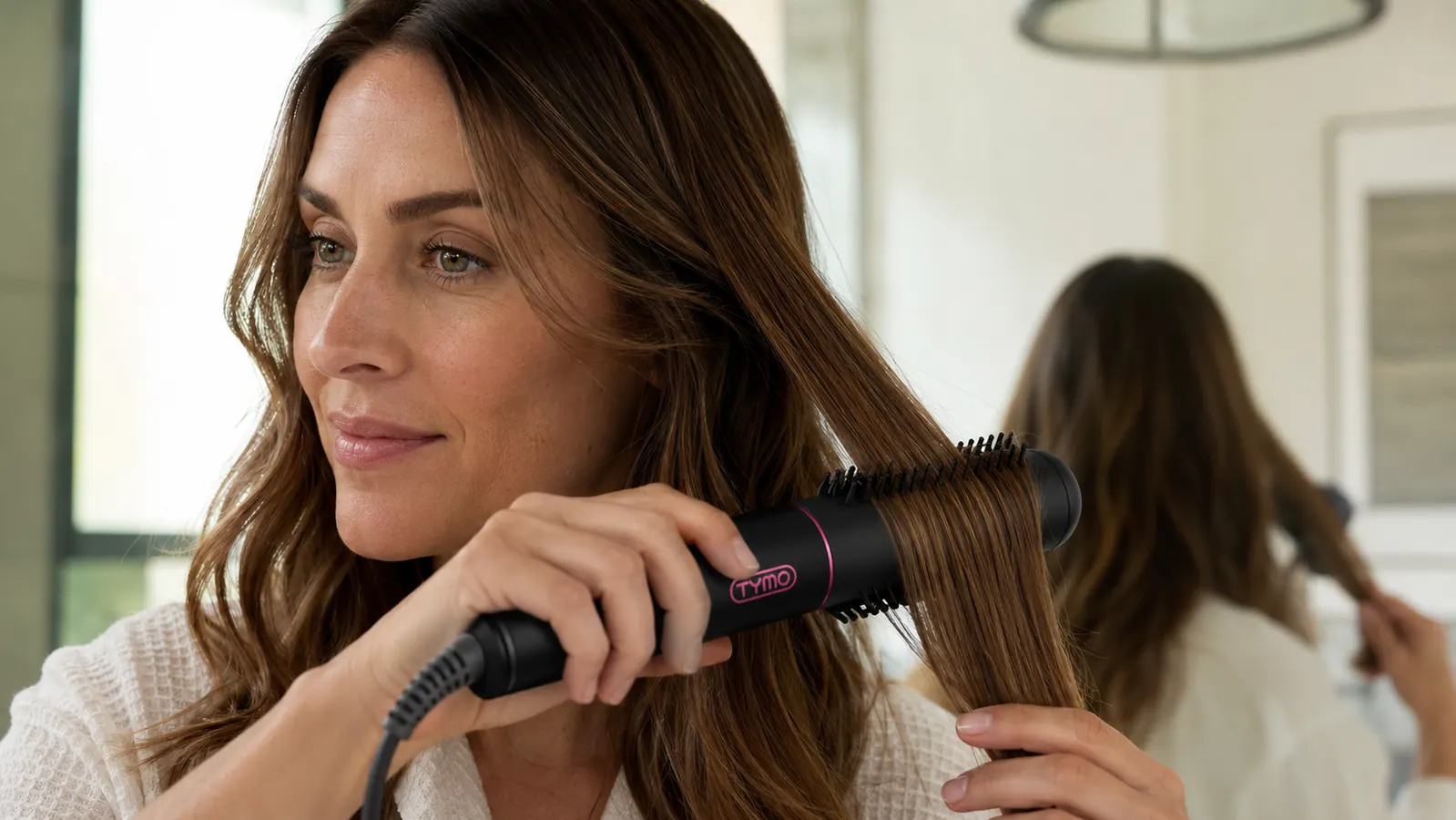
The single biggest difference is time. On the mornings I used the straightener brush, I was done in under 10 minutes, and that includes brushing through a couple of stubborn tangles near my nape that usually slow me down. It works more like a heated hairbrush than a styling tool you have to clamp and pull section by section. You run it down a two-inch piece of hair once, sometimes twice on a thicker chunk near the crown, and move on to the next section. There is no separating hair into a dozen tiny clipped sections and working through each one individually, which is where most of the flat iron's time actually goes, especially on a morning when you are half awake and your coordination is not at its best.
The second win is forgiveness, and honestly this is the bigger deal for most people reading this. A flat iron has two flat plates that will absolutely leave a crease, a wave line, or a burn mark if you hold it in one spot too long or let it drift too close to your scalp near the part. The straightener brush's bristles create a physical buffer between the heated plate and your skin, so even on a groggy Monday when I am checking my phone with one hand and styling with the other, I have never once burned myself with it. My mother-in-law, who is 68 and has never successfully used a flat iron without asking for help, picked up the straightener brush during a visit and had usable, presentable results on her very first try. That is not a small thing when you are shopping for a tool that has to work for more than one skill level in the same house.
There is also a volume argument that gets overlooked in most comparisons. Because the brush is moving through hair in a single continuous motion rather than clamping it completely flat, it tends to preserve a little natural root lift and movement instead of pressing hair into a flat pancake against the scalp. If you like straight hair that still has some body and swing to it, rather than the stick-straight, glued-down look, the brush's finish reads more natural on most people.
Where the Flat Iron Wins
If you want that glass-flat, zero-texture, editorial-straight look, a traditional flat iron still does it better, full stop. The direct plate-to-hair contact of a good ceramic or titanium iron flattens the hair cuticle more completely than bristles can, simply because the bristles are physically holding part of each section away from full plate contact the entire time. For a wedding, an interview headshot day, or any occasion where I want completely flat hair with zero visible texture or flyaway, I still reach for the flat iron without hesitation.
A flat iron also wins on raw versatility once you actually know how to use it well. You can flip the ends under or out with a simple wrist rotation, create loose beachy waves by rotating the barrel as you pull down, and control tension section by section in a way the brush's fixed design simply does not allow. If you already own a flat iron and have spent years mastering the technique, the styling ceiling is genuinely higher with it. The straightener brush's ceiling is lower, but its floor is much higher, meaning a total beginner gets a good, presentable result fast, while a practiced flat iron user can get an even better, more customized result, just more slowly and with more room for a bad hair day if their technique slips.
Want the tool that gets you out the door in under 10 minutes?
The TYMO Ring straightener brush is the one I actually reach for on weekday mornings. Check today's price and current availability on Amazon.
Amazon Check Today's Price on Amazon →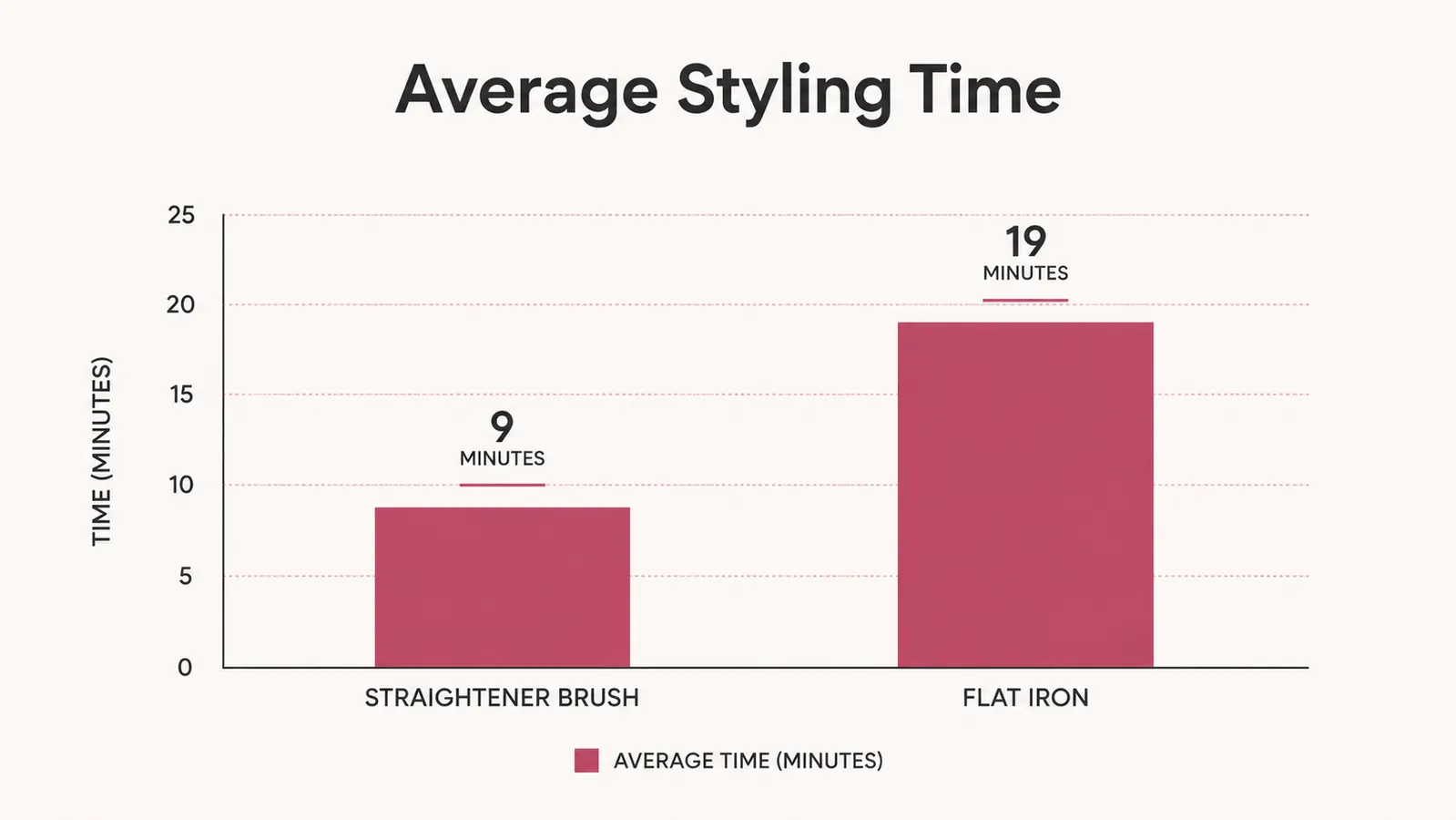
The Heat and Hair Health Question
Both tools use ceramic or ionic heating elements in their mid-range and higher models, so raw heat quality is not wildly different once you compare two similarly priced options. Where they actually diverge is repeated pass count, and this matters more than most reviews admit. Because a flat iron requires precise sectioning to get an even result, it is easy to end up going back over the same piece two or three times when a section did not come out flat enough on the first pass. Each extra pass is extra heat exposure sitting directly against your strands. The straightener brush's single-stroke design means I am running heat over each section fewer times on average across a full head, which genuinely matters if you are already dealing with color-treated, fine, or heat-damaged hair that shows wear fast.
Neither tool is a substitute for heat protectant, and I want to be clear about that before anyone assumes the brush is somehow a free pass. I use a heat protectant spray every single time regardless of which tool is in my hand that morning, and I would tell anyone reading this to do the same no matter which one you buy. The straightener brush being gentler on skin contact does not mean it is not genuinely hot. It runs up to 450 degrees Fahrenheit on the TYMO Ring, the same ballpark as most quality flat irons on the market, so respect it accordingly.
The flat iron gives you a better finish if you already know what you're doing. The straightener brush gives you a good finish whether you know what you're doing or not.
Portability and Everyday Handling
This part rarely gets mentioned in comparisons but it matters if you travel or you are styling in a small bathroom with limited counter space. The straightener brush's handle is thicker and shaped more like a hairbrush, so it is easier to grip one-handed while you are also holding your phone, your coffee, or your toddler's cereal bowl with the other. A flat iron's slim, flat handle is comfortable once you are used to it, but it takes a more deliberate two-handed grip to section and clamp correctly, which is harder to do one-handed in a rush.
For travel specifically, both tools pack down small enough for a carry-on, and most current models of each come with dual voltage for use abroad. The difference shows up at airport security and in a packed bag. A flat iron's exposed plates can still be warm when you toss it in your bag ten minutes after unplugging it, and I have singed the inside of a toiletry bag more than once being impatient. The straightener brush's bristle guard means even a still-warm unit is far less likely to scorch fabric or another item packed next to it, which has made it my default travel pick even on trips where I care more about a sleek finish than speed.

Cost Over Time
At today's price, the TYMO Ring straightener brush lands close to a mid-range flat iron, so this is not really a budget decision for most people. Both tools last for years if you are not dropping them on tile floors or letting the cord fray near the base. The real cost difference is time, not dollars. If your morning routine is the actual bottleneck in your day and not your wallet, the straightener brush pays for itself in minutes saved almost every single weekday, and those minutes add up to real hours over a year of daily use.
It is also worth mentioning replacement cycles. Flat iron plates can wear unevenly over time if you consistently clamp harder on one side than the other, which eventually shows up as a slightly uneven finish that is hard to notice day to day but obvious in a six-month comparison photo. The brush's bristle-and-plate design seems to distribute contact more evenly across the surface, which is part of why mine still performs close to how it did on day one, even after several months of near-daily use.
Who Should Buy Which
Buy the straightener brush if your hair is naturally straight to loosely wavy, you want to keep some root volume instead of pancake-flat hair, you are new to styling tools or you are styling a kid's or a parent's hair alongside your own, you travel often, or you simply do not have 20 spare minutes most mornings. It is also the better pick if more than one person in your house will be using it, since the learning curve is close to zero and the burn risk is so much lower.
Buy a traditional flat iron if you have very thick or coarse hair that needs stronger, more targeted heat contact to actually lay flat, you already have the clamp-and-pull technique down and want maximum styling flexibility, or you are prepping for a specific event where completely flat, texture-free hair is the non-negotiable goal. I keep both tools in my drawer, but on a normal Tuesday morning with a 7am meeting, the straightener brush is what's plugged in and warming up, and the flat iron stays in the drawer until I actually need the extra polish it delivers.
Ready to cut your styling time in half?
See current pricing, colors, and availability for the TYMO Ring straightener brush on Amazon before you decide.
Amazon Check Today's Price on Amazon →