
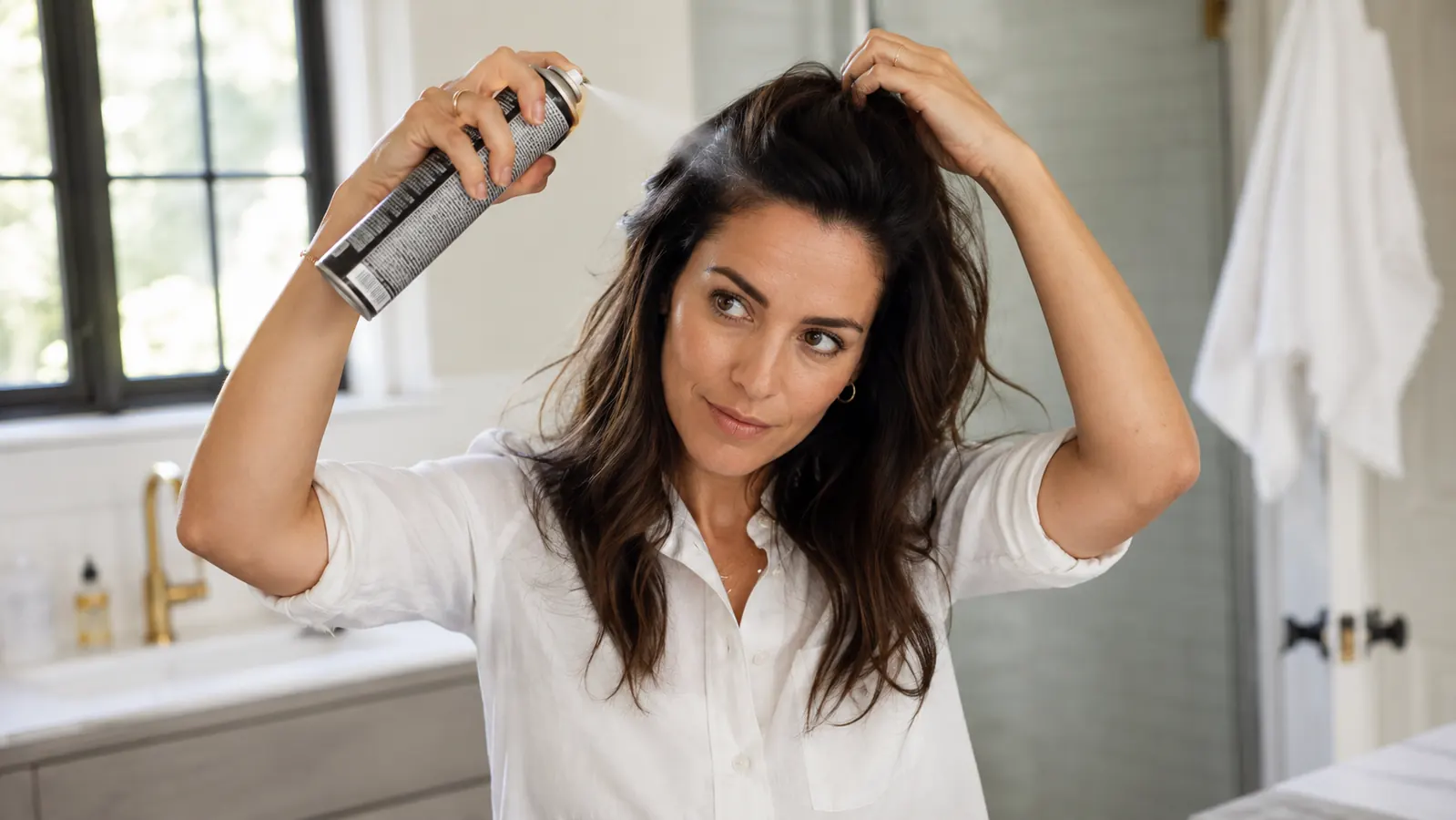
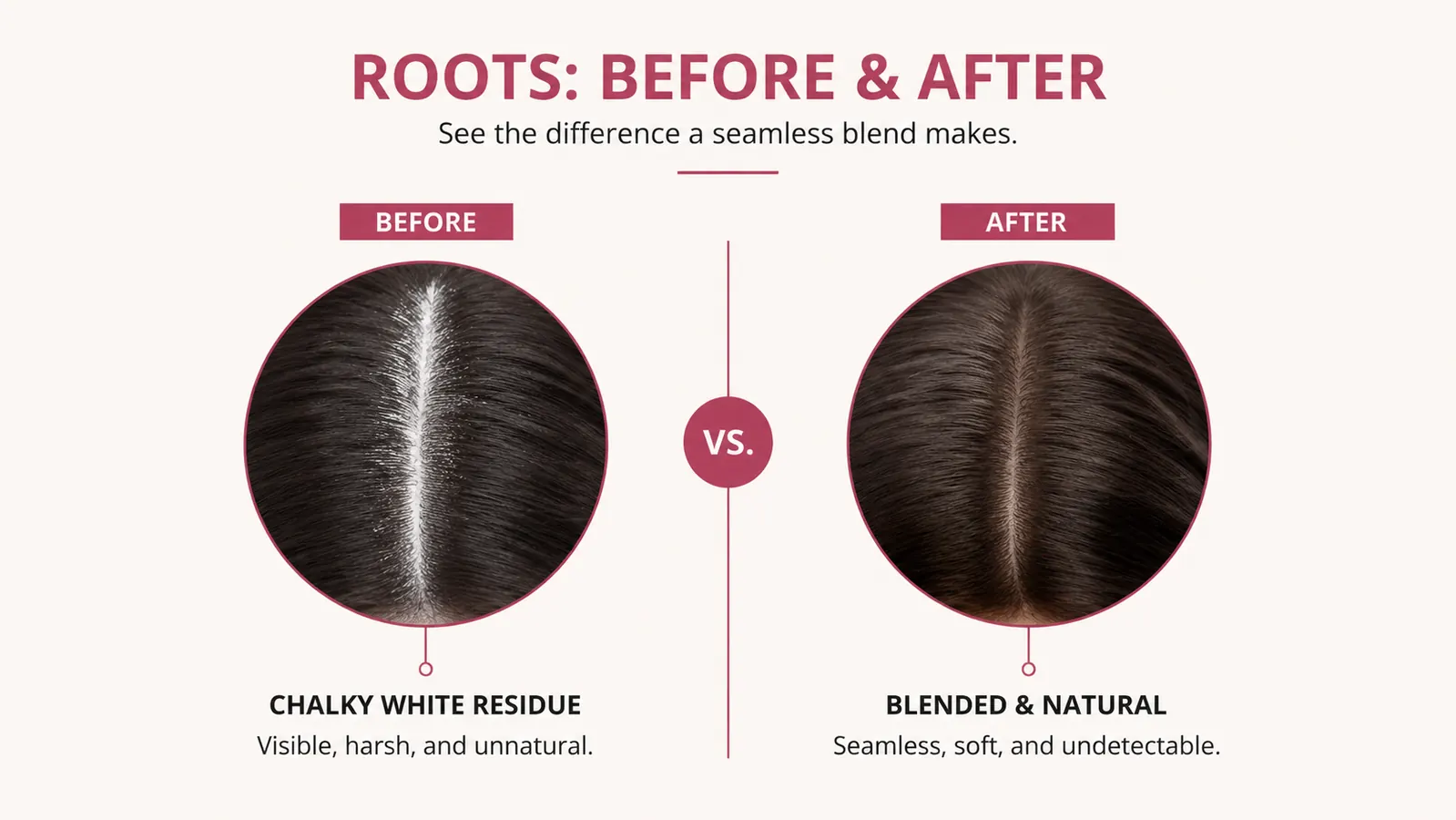
The first time I used dry shampoo on my dark brown hair, I looked like I'd walked through a flour fight. I sprayed it straight onto my part, rubbed it in with my palms, and went to check the mirror expecting salon-fresh roots. Instead I had a gray-white haze sitting right where everyone would see it first, right along my part line, right at my temples. I almost gave up on dry shampoo completely and went back to washing every single day, which was its own kind of exhausting given that I was already getting up at 5am to work out before my kids woke up.
It took me embarrassingly long to figure out that the problem was never the product. It was how close I was holding the can, how much I was using, and the fact that I wasn't giving the powder any time to actually absorb before I started touching my hair. Once I fixed those three things with a can of Batiste, the residue basically disappeared, even on my darkest hair days, and even in the harsh light of my office bathroom, which is the least forgiving mirror I own.
If you have dark hair, dry shampoo can feel like a trap. You need it more than anyone, since oily roots show up faster on dark strands, but the same product that saves lighter hair colors without a second thought can leave you looking like you've got early gray coming in at the crown. The good news is that the fix isn't a different product, or at least it doesn't have to be. It's a different process, and it's one that took me a couple of months of trial and error to actually nail down. Below is the exact six-step method I use now, plus what to do if you're still seeing a faint cast after trying it.
Skip the guesswork and start with a formula that blends easily
Batiste's classic spray has a fine, low-visibility powder that's easier to work in than a lot of the chunkier formulas out there. It's the one I keep reaching for on this exact routine.
Amazon Check Today's Price on Amazon →Step 1: Start with hair that's actually dry
This sounds obvious, but it's where most residue problems start. Dry shampoo is designed to absorb oil, not water. If your hair is even slightly damp from a workout, humidity, or a quick rinse, the powder has nowhere to go and it just sits on the surface as a paste-like film instead of soaking into the scalp the way it's supposed to. I learned this the hard way after a hot yoga class when I sprayed dry shampoo onto roots that were still sweaty from an hour of sun salutations. It clumped instead of absorbing, and no amount of brushing fixed it. I ended up rinsing and starting over, which defeated the entire point of skipping a wash that day.
If your roots are damp, let them air dry for ten to fifteen minutes first, or hit them with a blow dryer on a cool setting for a minute or two. Bone-dry hair is the difference between powder that vanishes into the scalp and powder that sits there advertising itself to everyone standing behind you in line at Target. This step costs you almost nothing in time, but skipping it undoes every other step on this list, no matter how carefully you follow the rest of the routine.
Step 2: Section your hair and hold the can at a distance
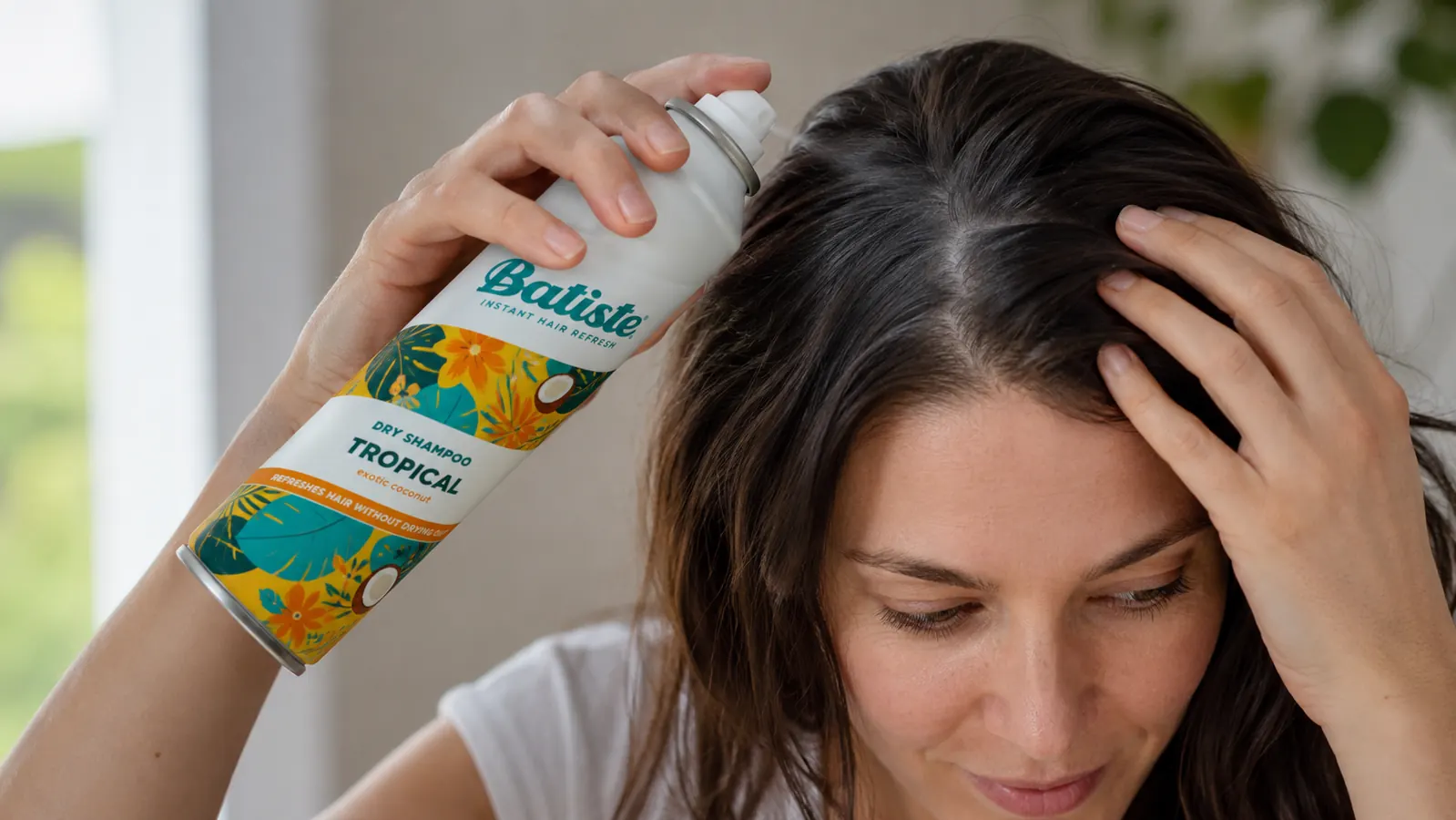
Don't spray dry shampoo through your hair like you're finishing a blowout. Section it the way you would if you were applying root touch-up color. I part my hair into four sections with clips, working from the back forward, so I can see exactly where I'm spraying instead of guessing through a curtain of hair and hoping for the best. It takes an extra thirty seconds and it's the difference between targeted, even coverage and a random dusting that hits some spots twice and misses others completely, which is exactly how you end up with one bald-looking patch of white powder and one section that's still shiny with oil.
Hold the can about six inches from your roots, not two. Holding it too close is the single biggest cause of visible cast, because you're dumping a concentrated blast of powder onto one small patch of scalp instead of letting it disperse across a wider area the way it's meant to. A light, sweeping motion at that distance spreads the product thin enough that it has a real chance of blending in rather than sitting as a solid patch. Think of it the way you'd think about spray paint, close range gives you a heavy, obvious coat, and distance gives you an even, diffused one that fades into whatever's underneath it.
Step 3: Use less than you think you need
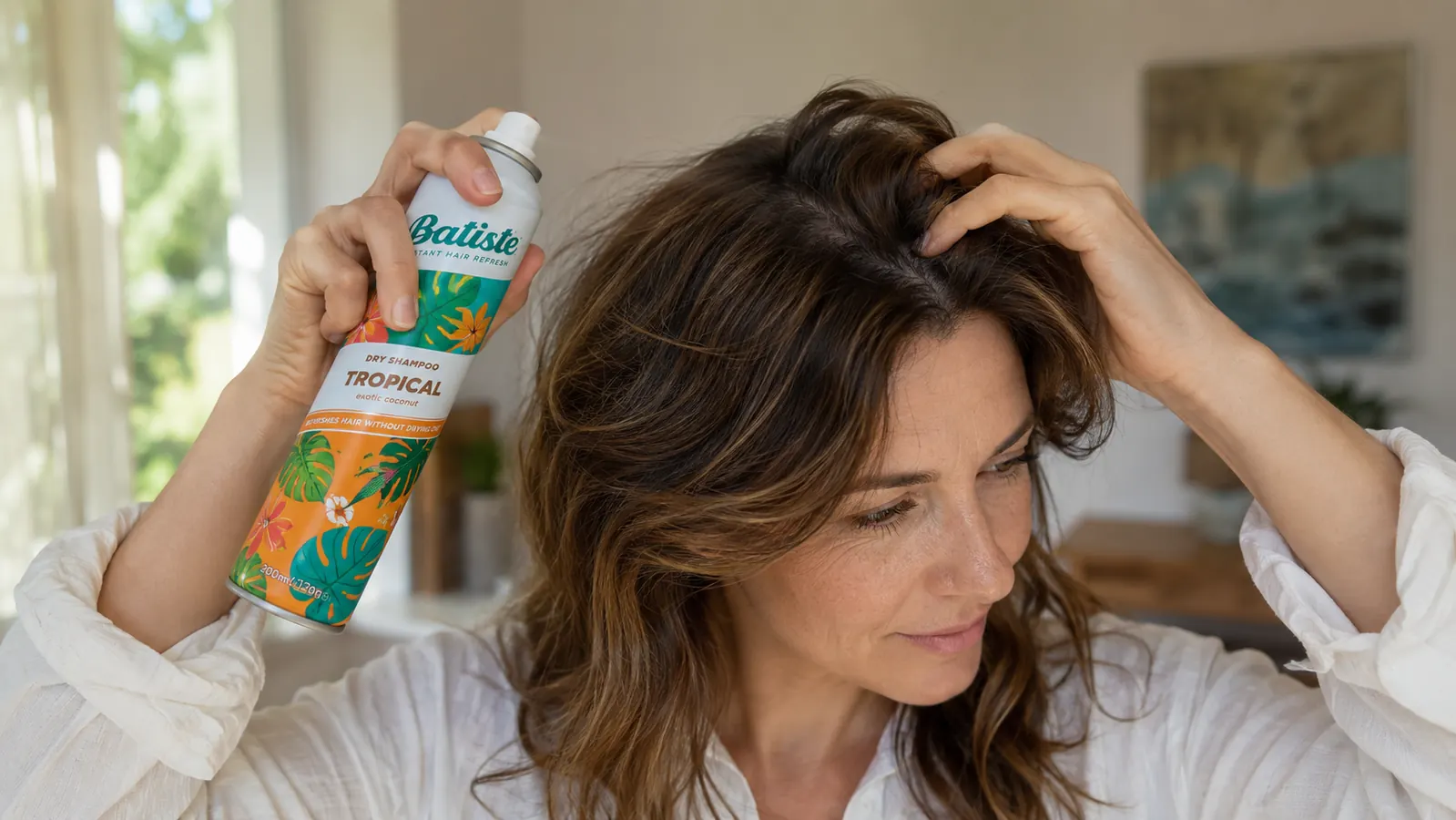
I default to two-second bursts per section, not a steady spray. It's tempting to really coat your roots when they're greasy, especially on day three when you're starting to feel self-conscious about it in meetings, but more product doesn't absorb oil faster, it just gives you more residue to blend and more work later. Start light. You can always add a second pass to a spot that's still oily after the first round, but you can't easily undo an overloaded section without brushing it out thoroughly or, in bad cases, washing it out and starting the whole routine over from scratch.
On my second-day hair I usually need two to three short bursts total across my whole head, concentrated at the crown and part line where oil shows first. By day three, closer to five, spread a little more broadly toward my temples and the nape of my neck. If you're consistently needing to soak your roots to feel clean, that's usually a sign to actually wash that day rather than layer more powder on top of more powder, which just compounds the residue problem instead of solving it and leaves your scalp feeling coated by midweek.
Step 4: Wait before you touch it
This is the step almost everyone skips, and it's the one that fixed my residue problem more than any other change on this list. Dry shampoo needs one to two minutes to actually absorb the oil on your scalp before it's ready to be worked in. If you start massaging it in immediately, you're just smearing wet-looking, oil-laden powder around instead of letting it do its job of soaking up that oil first, which is really the entire point of the product in the first place.
I spray my roots, then go brush my teeth or finish my makeup, and come back to my hair after a couple of minutes. By then the powder has usually changed texture slightly, it goes from looking chalky and wet-looking to looking more matte and less obvious, which is my sign that it's absorbed enough to move on to the next step. If I'm in a genuine rush, I'll at least spray my roots first, before anything else in my routine, so it gets a head start while I do everything else, then circle back to finish the job.
Step 5: Massage it in with fingertips, then brush it out
Use your fingertips, not your whole palm, to massage the product into your scalp in small circles. This works the powder down into the roots instead of just pushing it around on the surface, which is what happens when you use a flat hand and a general rubbing motion across the top of your head. I focus on my part line and my crown first since that's where residue shows up most on dark hair, then move outward toward my temples and the back of my head, checking each section as I go.
After massaging, brush through with a boar bristle brush or a paddle brush, starting at the roots and working down. This step matters almost as much as the massage. Brushing distributes any remaining powder evenly through more hair instead of leaving it concentrated at the root, and it also helps rough up your roots slightly for extra volume, which is a nice side benefit on days my hair is looking flat and lifeless. If I skip the brush step, I can still see faint residue even after a good massage, especially near my part where the product tends to concentrate.
Step 6: Do a final check under real light
Bathroom lighting lies. I always do a final check near a window or under a brighter light before I leave the house, because the soft yellow light in most bathrooms hides residue that shows up clearly in daylight or under fluorescent office lighting. If I spot a stubborn patch, a little more brushing usually clears it, or I'll rub a bit of the powder between my fingers first before applying it directly to break it down finer next time, which helps prevent the same spot from being an issue again on future applications.
What Else Helps
If you have very dark hair and you're still seeing a faint cast even after all six steps, try applying the dry shampoo the night before instead of the morning of. Sleeping on it gives the powder extra time to fully absorb and settle overnight, and you wake up to roots that just need a quick brush rather than a full application from a cold start. I do this before early meetings when I don't have time to wait around in the morning, and it's honestly become my preferred method most weeks, not just a backup plan for busy days.
A tinted dry shampoo can also help if you have very dark or black hair and you're doing everything right but still catching a faint gray tone in bright light. Batiste makes a Dark & Deep Brown version that's formulated to blend better with darker shades than the classic original formula. I don't always reach for it, since the original works fine for my medium brown, but it's worth trying if your hair is closer to black and you're still fighting the cast after nailing the technique described above.
One more thing that helped me was switching how I store the can. Keeping it somewhere warm, like a closed bathroom cabinet near a heat vent, seemed to make the spray come out a little clumpier for me over time. I now keep mine in a drawer at closer to room temperature and the spray pattern feels more consistent, finer, and easier to work with, which sounds minor but does make a visible difference once you're paying attention to it.
Finally, don't underestimate a simple shake before you spray. A hard shake for a few seconds mixes the propellant and powder more evenly, which keeps you from getting an uneven burst of concentrated product right at the start of a spray, the kind that tends to land heaviest exactly where you don't want it. It's a five-second habit that costs nothing and quietly prevents one of the more common causes of an obvious white patch.
The residue was never a dry shampoo problem. It was a two-second-blast-and-immediately-touch-it problem.
Ready to actually stretch your wash days without the chalky roots
Batiste's fine-powder formula is easy to work with once you've got the technique down, and a single can lasts most people several weeks of second and third day touch-ups.
Amazon Check Today's Price on Amazon →