
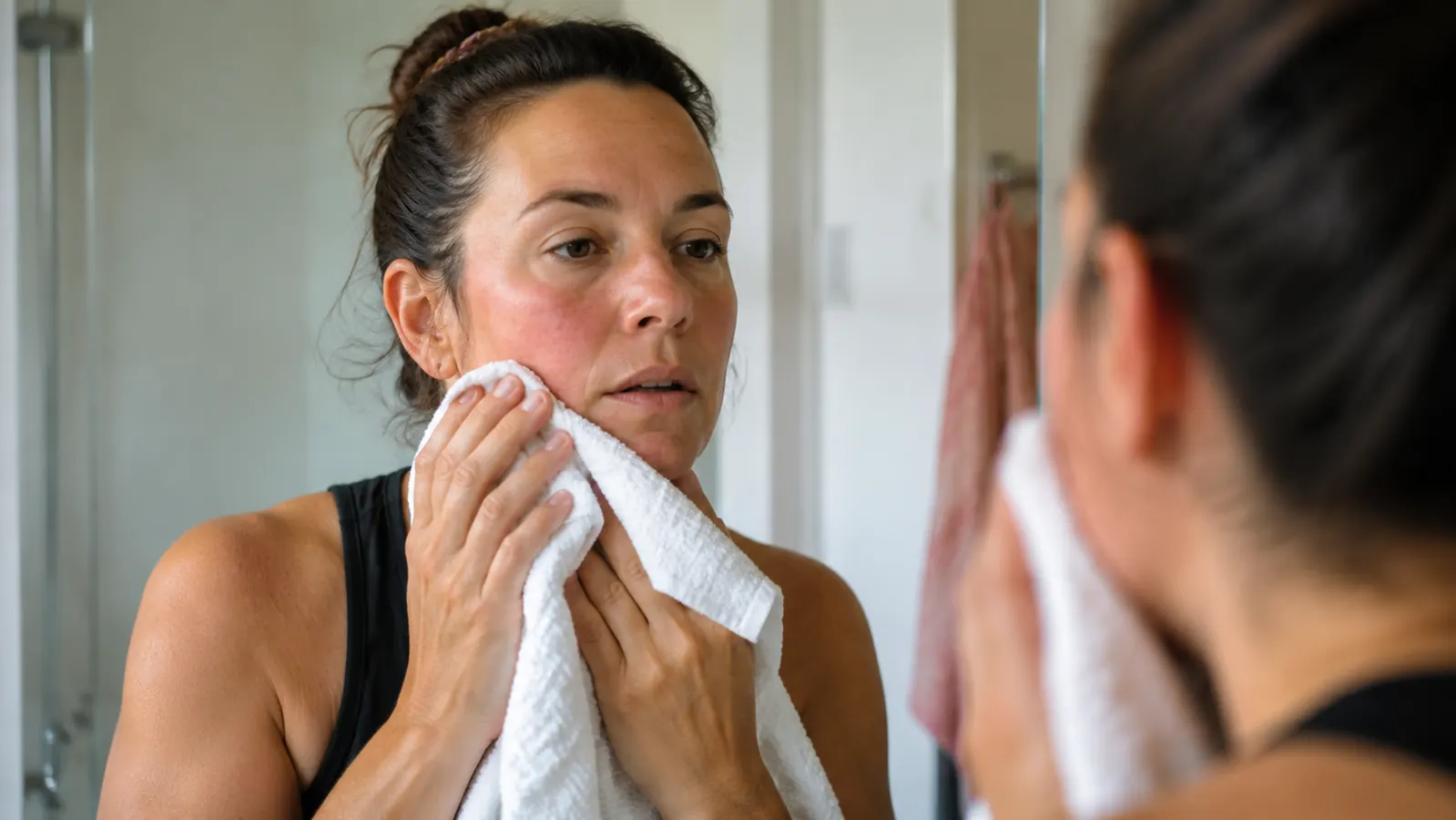
I was diagnosed with rosacea four years ago, and in that time I have thrown out more half-used cleansers than I want to admit. Foaming ones. Gel ones. One with a botanical name that sounded soothing and instead left my cheeks looking like I'd been slapped. So when I say I was skeptical about the La Roche-Posay Toleriane Hydrating Gentle Cleanser, understand that skepticism is my baseline with anything that claims to be gentle. Gentle is the most overused word on a skincare label, right up there with clean and natural, and it rarely means what it should.
This isn't a first-impressions review. I have used this La Roche-Posay cleanser through three separate flare-ups over about five months, including one triggered by a humid trip to Florida and one that showed up for no reason I could identify, which is the most rosacea thing that could possibly happen. I want to tell you what actually happened to my skin, including the parts that weren't perfect, because a cleanser that only gets talked about in glowing terms usually means nobody's being fully honest, or nobody testing it actually has skin that reacts to anything.
The Quick Verdict
Genuinely gentle and reliable during flare-ups, but it won't calm active redness on its own and the tube runs out faster than the price suggests.
Amazon Check Today's Price →If your face still stings after "gentle" cleansers, this one might finally not.
Dermatologist-recommended, fragrance-free, and formulated with niacinamide and ceramides for reactive skin. Check today's price on Amazon before your next flare-up.
Amazon Check Today's Price on Amazon →How I Actually Tested This
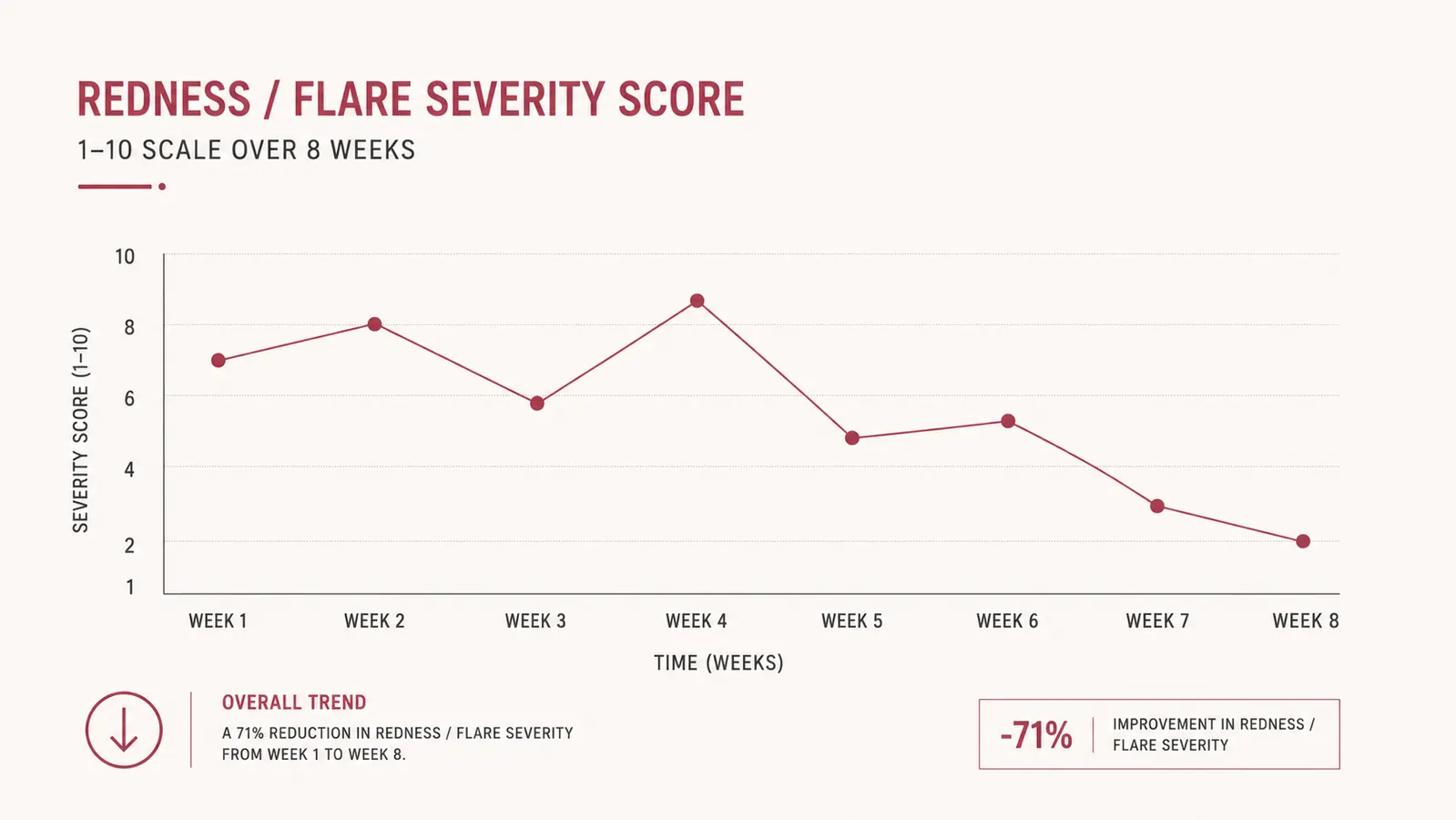
I didn't just use this once a day and call it a review. I used it morning and night for five months, tracked my flare-ups in a plain notes app (nothing fancy, just a number from 1 to 10 for how flushed and tight my face felt each morning), and used it through two rounds of doxycycline my dermatologist prescribed for a bad flare in March. I also traveled with it twice, once to a dry climate and once to a humid one, because rosacea skin behaves differently depending on where you are and I wanted to see if the La Roche-Posay cleanser held up outside my normal bathroom routine.
I did not pair it with anything aggressive. No retinol, no exfoliating acids during flare weeks. Just the cleanser, a barrier moisturizer, and mineral sunscreen. That's intentional. I wanted to isolate what the cleanser itself was doing rather than muddy the results with five other products fighting for credit, which is how most beauty reviews end up useless. When six things change at once, nobody can actually say which one worked.
One thing worth saying up front: I am not a dermatologist and this isn't medical advice. If you have diagnosed rosacea, loop your doctor in before making product changes, especially during a flare. This is just one flushed face's honest account, tracked as carefully as I could manage without turning my bathroom into a lab.
The Texture Nobody Really Describes Well
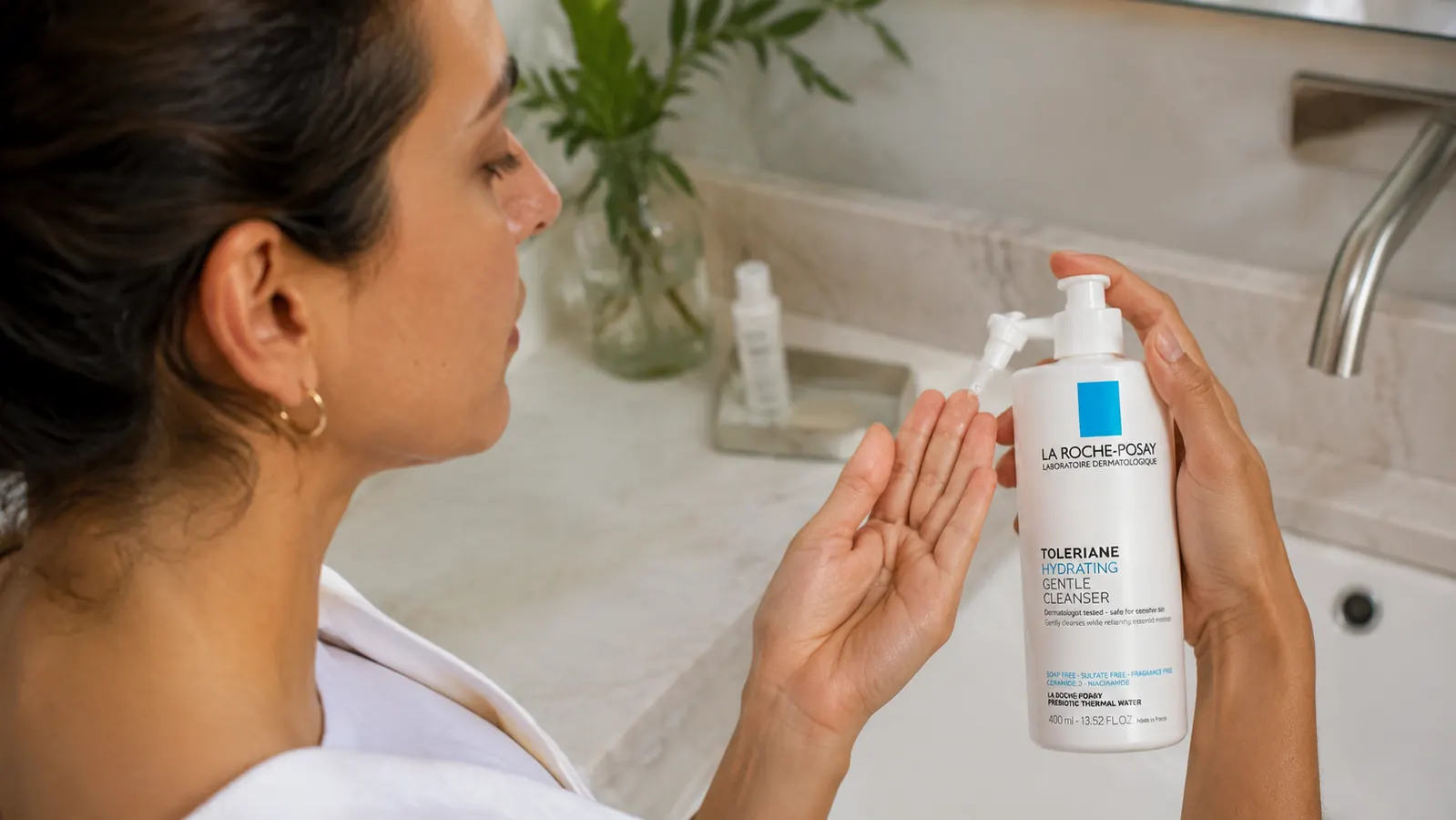
Most reviews say "creamy, non-foaming texture" and leave it there, which tells you almost nothing. It's closer to a lotion than a gel. It comes out white and slightly thick, and when you rub it between wet hands it thins out but never really foams, maybe the faintest bit of lather if you work it hard, nothing like a traditional face wash. If you grew up loving the squeaky-clean feeling of a foaming cleanser, the first week is going to feel wrong. Your face won't feel like it was just scrubbed. It feels more like you rubbed on a light lotion and rinsed most of it off.
That took genuine adjustment for me. I kept feeling like my makeup wasn't fully off, so for the first two weeks I was double-checking with a cotton pad, and honestly, it was off. I was just unlearning the idea that clean has to feel tight and stripped. That unlearning is actually the whole point of this cleanser, and once it clicked for me, going back to a foaming face wash felt almost aggressive, like using a scouring pad on a nonstick pan.
The other thing that surprised me is how little residue it leaves once you rinse. I expected a lotion-textured cleanser to feel filmy afterward, the way some cream cleansers do, but it rinses cleaner than the texture suggests. My skin felt soft rather than coated, and it didn't interfere with layering serum or moisturizer on top, which matters a lot when your morning routine already has enough steps.
What Happened During an Actual Flare-Up
Here's the part most reviews skip entirely, because most reviewers don't have rosacea and are reviewing this for dry or generally sensitive skin, which is a different animal. During my March flare, my cheeks and the sides of my nose were hot to the touch, visibly raised in a couple of spots, and any water above lukewarm made it worse. I switched to washing with cool water only and patting, never rubbing, the cleanser off.
The honest result: it did not sting. That was the win. Product after product over the years has stung on contact during a flare, that sharp little zing that tells you the barrier is compromised and whatever you just put on it is not welcome. This one didn't do that, not once across three flares. But I also want to be clear that it didn't visibly reduce the redness during the flare either. It cleaned my face without adding insult, which for rosacea-prone skin during an active episode is genuinely most of what you can ask a cleanser to do. The calming came from the prescription and from just riding out the flare, not from the cleanser.
My flare score (that 1-10 tracking I mentioned) went from an 8 down to a 3 over about eleven days during the March episode, which lines up with a fairly typical flare timeline for me with treatment. I can't credit the cleanser with the improvement. What I can say is that nothing about my routine made it worse, and in years past, the wrong cleanser absolutely has. There's a real difference between a product that helps and a product that just doesn't get in the way, and I've stopped expecting cleansers to do the former.
The Florida trip flare was milder, a 5 at its peak, and I suspect humidity plus travel stress plus airplane recycled air were the real triggers rather than anything skincare-related. I kept the same cleanser routine the whole trip and didn't see any additional irritation from packing it in a smaller travel bottle or using slightly different tap water at the hotel, which is more than I can say for a foaming cleanser I traveled with two years ago that left my face raw within two days.
The Ingredient List, Translated
The two ingredients that matter most here are niacinamide and ceramides. Niacinamide has decent research behind it for reducing visible redness and supporting barrier function over time, though it's a slow, cumulative effect, not an overnight fix. Ceramides are the fats that hold your skin barrier together, and rosacea-prone skin tends to have a compromised barrier to begin with, which is part of why it reacts to everything. Feeding that barrier instead of stripping it is the actual mechanism behind why this cleanser doesn't set off my face.
It's also fragrance-free, which matters more than people think. I used to assume "lightly scented" products were fine because the scent was faint. For rosacea skin, faint doesn't mean harmless. Fragrance, even natural fragrance from essential oils, is one of the more common flare triggers. This cleanser has none, and my nose confirms it, there's a very neutral, almost nonexistent smell, more like clean laundry than anything floral or herbal.
One ingredient worth flagging honestly: it also contains glycerin and a mild surfactant base, nothing exotic, nothing that made my patch test flare, but if you're someone who reacts to specific surfactants (some rosacea patients do, especially to sodium lauryl sulfate), it's worth doing your own patch test on your jawline for a few days before committing your whole face to it. My skin tolerated it fine, but I've learned the hard way that my fine isn't everyone's fine.
Using It Alongside Prescription Treatment
Nobody talks enough about how a cleanser behaves when it's not the only thing on your face. During my March flare, I was on a two-month course of oral doxycycline, plus a topical metronidazole gel my dermatologist prescribed for the bumps along my chin. Both of those can make skin more reactive to whatever you wash with, and doxycycline in particular increases sun sensitivity, so I was also layering mineral sunscreen daily on already-irritated skin. That's a lot of variables stacked on one face.
The cleanser never fought with any of it. I washed at night before applying the metronidazole gel, and in the morning before sunscreen, and at no point did it interfere with absorption or cause the gritty pilling some cleansers cause when layered under other products. My dermatologist actually asked what I was using when she saw how calm my barrier looked at the six-week check-in, which is the closest thing to a professional endorsement this cleanser has gotten from someone who wasn't me.
If you're managing rosacea with prescription treatment, this matters more than people realize. A cleanser that strips your barrier while you're also using a topical antibiotic is asking for trouble, since a compromised barrier absorbs medication unevenly and can make side effects worse. This one stayed out of the way, which let the actual treatment do its job instead of fighting a second irritant on top of the first.
What I Tried Before This One
Context matters here, so let me be specific about what didn't work. Before this, I used a well-known drugstore "sensitive skin" foaming wash for about a year, the kind sold in a bright blue bottle at every pharmacy checkout. It felt fine in the shower and awful an hour later, that tight, itchy feeling that made me want to claw at my own cheeks. Before that, a botanical cleanser with chamomile and calendula, marketed directly at redness-prone skin, actually triggered one of my worst flares to date, likely from the plant extracts themselves, since chamomile is in the same family as ragweed and can cross-react in people prone to inflammation.
I mention this because "gentle" and "natural" get used interchangeably in skincare marketing, and for rosacea-prone skin they are not the same thing at all. A synthetic, boring, lab-formulated cleanser with a short ingredient list has treated my face better than anything with a farmers-market vibe on the label. That was a hard lesson to accept after years of assuming plant-based automatically meant safer.
Where It Actually Falls Short
I promised honest, so here's the unflattering part. The pump on the 13.5 fl oz bottle is stingy. You have to press it two or three times to get enough product for a full face, which either means you're under-using it (bad for your skin) or going through it faster than the price per ounce suggests (bad for your wallet). I went through a bottle in about ten weeks using it twice daily, which is faster than I expected going in.
It also doesn't remove heavier makeup or SPF on its own. On days I wore a mineral sunscreen with any grip to it, I needed a separate micellar water or oil cleanser first, then this as a second step. If you're expecting a one-and-done cleanser that handles a full face of makeup, this isn't it, and you'll want to budget for a pre-cleanse step on heavier days, which adds both time and cost to a routine that's supposed to be simplifying things.
Last honest note: it did nothing dramatic. If you're hoping a cleanser will visibly shrink your rosacea redness or even out your tone, that's not this product's job, and no cleanser's job, honestly. What it did was stop making things worse, which after years of products that actively made things worse, was worth more than I expected going in. I'd rather have a boring cleanser that behaves than an exciting one that gambles with my face.
What I Liked
- Never stung, even during active flare-ups
- Fragrance-free with a genuinely neutral smell
- Ceramides and niacinamide support the skin barrier long-term
- Non-foaming formula doesn't strip natural oils
- Dermatologist offices commonly recommend it, which counts for something
- Played well with prescription topicals during an active treatment course
Where It Falls Short
- Pump dispenses too little per press, product runs out faster than expected
- Doesn't remove heavier makeup or grippy sunscreen alone
- No visible redness reduction from the cleanser itself
- Texture takes real adjustment if you're used to foaming cleansers
- Doesn't lather, which some people find hard to trust as "clean"
- The 13.5 fl oz size is the only option, so there's no travel or trial size to test commitment first
It didn't fix my rosacea. It just stopped being one more thing my rosacea had to fight.
Who This Is Actually For
If you have rosacea, eczema, or skin that's currently angry from over-exfoliating or a bad reaction to something else, this is a smart, low-risk place to reset. It's also a solid pick if you just want a reliable cleanser that won't fight with your other products, since it plays well under retinoids and prescription treatments without adding extra irritation on top. If you're the kind of person who reads ingredient lists before buying anything for your face, you'll appreciate that there's nothing hidden in this one that requires a translator. I've also recommended it to my sister, who has more general sensitive skin without a formal rosacea diagnosis, and she's had the same no-drama experience, which tells me the gentleness holds up even outside a strictly rosacea use case.
Who Should Look Elsewhere
If you wear a full face of makeup daily and want a single cleanser to handle it all, you'll be frustrated by the extra step. And if you're chasing a cleanser that actively treats redness rather than just avoiding making it worse, this isn't a treatment product, it's a maintenance one. Pair your expectations accordingly and you won't feel let down. If your skin is oily rather than dry or reactive, you may also find the lack of foam unsatisfying, since it's genuinely built for barrier support over deep-clean sensation. And if you're on a tight budget and cost per ounce is your main deciding factor, there are cheaper ceramide cleansers out there. You're paying partly for the fragrance-free formulation discipline and partly for the brand's dermatologist reputation, and whether that's worth it depends on how many products you've already burned through trying to find one that behaves.
Stop handing your flare-ups more ammunition.
A cleanser that won't sting, strip, or trigger is half the battle when your skin already has a mind of its own. See today's price on Amazon.
Amazon Check Today's Price on Amazon →